
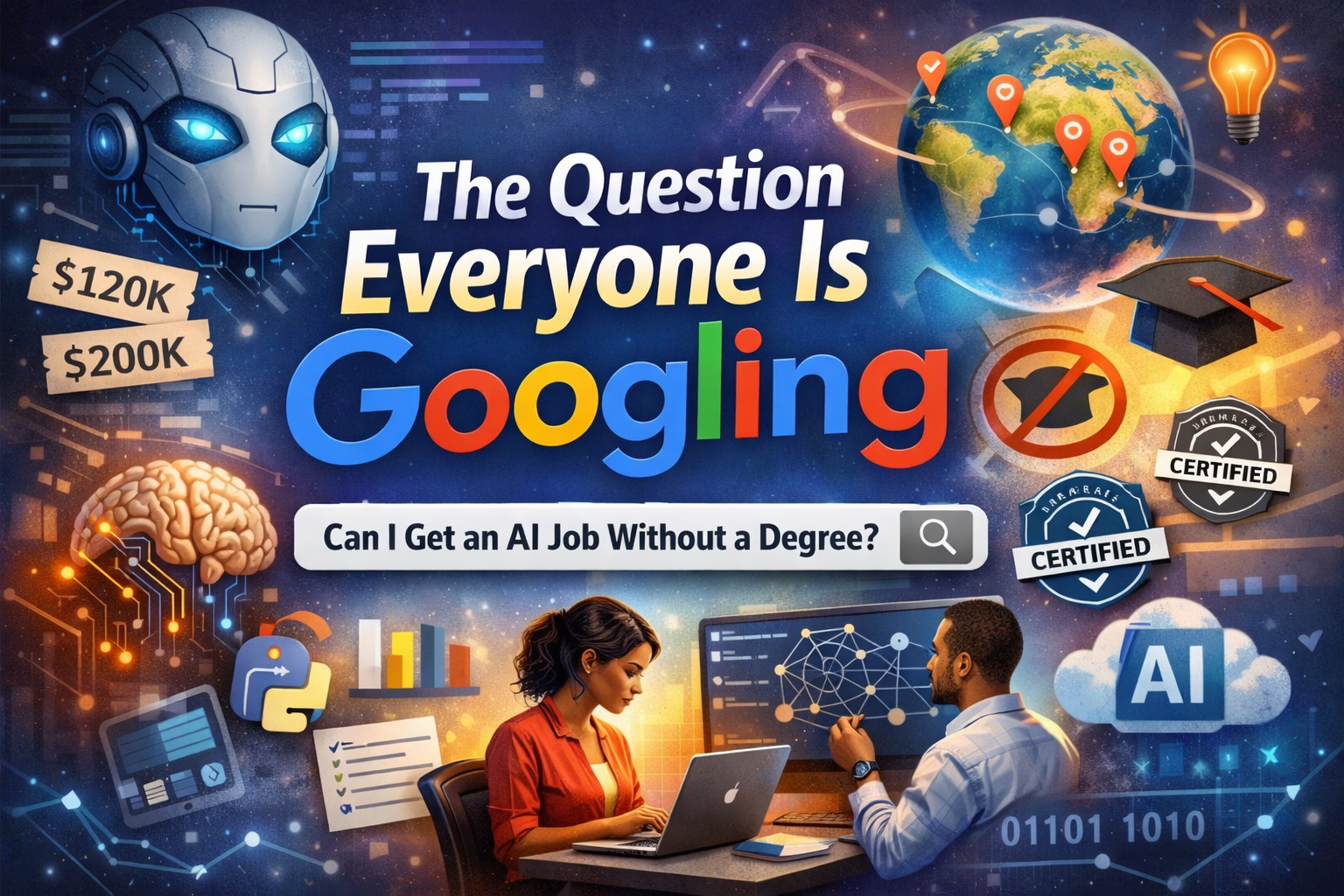
The Question Everyone Is Googling
Let me guess — you’ve been hearing a lot about AI lately. Maybe you’ve seen job listings paying $80,000, $120,000, even $200,000 a year for AI-related roles. And somewhere in the back of your mind, a voice says: “That’s not for me. I don’t have a computer science degree.”
Here’s the thing: that voice is lying to you.
The AI industry is one of the fastest-moving sectors on the planet right now, and it is actively looking for people — not just people with fancy diplomas, but people with real skills, curiosity, and a willingness to learn.
Companies like Google, Meta, and hundreds of AI startups in Nairobi, Lagos, Kigali, and Cairo are hiring people who can do the work — and a degree is not always the thing that proves you can.
This post is going to give you a straight answer: yes, you can get an AI job without a degree. But we’re also going to be real about what it actually takes, which roles are most accessible, and what you need to do right now to make it happen.
Quick Answer Yes, you can work in AI without a degree. Many AI companies — including major tech firms — hire based on skills, portfolios, and certifications rather than formal qualifications. That said, some roles (like research scientist) do still require advanced degrees. We’ll break down which is which.
Why the AI Industry Is Different From Most Fields
Most traditional industries — medicine, law, engineering — have gatekeeping built in. You need the credential before you can practice.
AI is different. Here’s why:
- The field moves too fast for universities to keep up. Most cutting-edge AI knowledge comes from research papers, open-source tools, and community projects — not textbooks.
- The tools are free and public. Frameworks like TensorFlow, PyTorch, Hugging Face, and scikit-learn are available to anyone with an internet connection.
- Results speak louder than credentials. If you can build something that works — a model, an app, an automation — that matters more than where you studied.
- Companies are desperate for talent. There is a global shortage of AI skills right now. Employers are flexible because they have to be.
This doesn’t mean you can skip learning. It means the learning doesn’t have to happen in a classroom that costs you four years and thousands of dollars.
You may also read: 10 Best AI Careers You Can Start Today (No Degree Required)
What Types of AI Jobs Are Out There?
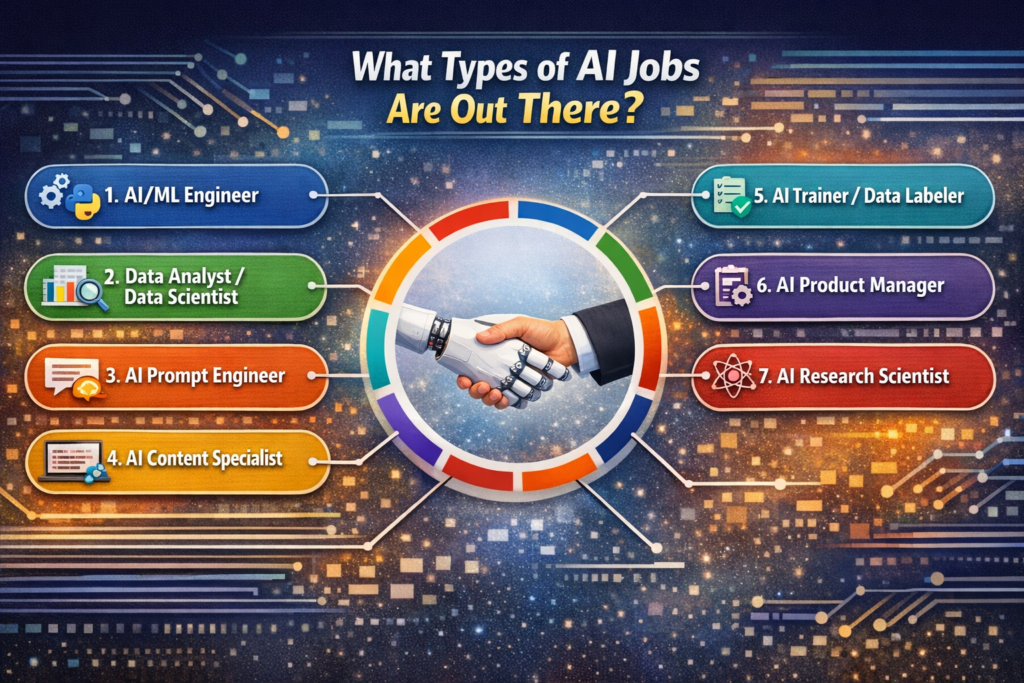
Before we talk about how to get in, let’s talk about what’s in. ‘AI job’ is a broad term. Here are the main categories:
1. AI/ML Engineer
These are the people who build and deploy AI models. They write code, work with large datasets, and turn research into real products. This role often needs strong Python skills and some math background — but self-taught engineers absolutely work in this space.
2. Data Analyst / Data Scientist
Data analysts find patterns in data. Data scientists take it further — building predictive models, running experiments, and informing business decisions with data. These roles are among the most accessible to self-taught professionals, especially if you’re comfortable with Python, SQL, and tools like Excel or Power BI.
3. AI Prompt Engineer
This is one of the newest and most accessible roles in AI. Prompt engineers design and optimize the instructions given to AI systems like ChatGPT or Claude. It requires understanding how AI thinks — not advanced coding. Many companies are actively hiring for this right now.
You may also read: Master Prompt Engineering: The Best Beginner’s Guide to AI Prompts (2026)
4. AI Content Specialist / Writer
Companies building AI tools need humans who can explain them clearly. If you understand AI and can write well, there’s a huge market for content, documentation, tutorials, and social media creation around AI products. This is a natural fit for content creators who already work with AI tools.
5. AI Trainer / Data Labeler
AI systems need human feedback to improve. Data labelers and AI trainers review outputs, flag errors, and help teach AI systems to behave correctly. This is often the entry point into the industry — platforms like Scale AI, Remotasks, and Appen hire globally, including from Africa.
You may also read: What Is Data Annotation and How Can You Get Paid for It? (2026 Guide for Beginners)
6. AI Product Manager
PMs who understand AI are in high demand. You don’t need to code to be an AI product manager, but you need to understand how AI works well enough to make smart decisions about it. Strong communication and project management skills matter here.
7. AI Research Scientist
This is the one role where a degree — often a PhD — is still commonly required. Research scientists push the boundaries of what AI can do. If this is your goal, further education is likely part of the path. But this is also the smallest slice of AI jobs available.
Degree vs. No Degree: What Really Gets You Hired
Here’s an honest breakdown of the paths into AI and how they compare:
Degree
Time
Cost
AI-Ready?
CS Degree
4 years
$20,000–$100,000+
Partially
Bootcamp
3–6 months
$5,000–$20,000
Sometimes
Online Courses
Self-paced
$0–$500/yr
Yes
Self-taught + Portfolio
Flexible
Mostly free
Yes
Certifications
Weeks–months
$50–$400
Yes
The takeaway: formal education is one path. It’s not the only path, and for many roles, it’s not even the fastest one.
The Skills That Actually Matter
So if not a degree, then what? Here are the skills that consistently come up in AI job listings — and that you can build right now, for free or nearly free.
Technical Skills (For Engineering-Focused Roles)
- Python programming — this is the #1 language in AI. Learn it first.
- Machine learning basics — understand what supervised, unsupervised, and reinforcement learning mean.
- Data handling — pandas, NumPy, and SQL are your core tools for working with data.
- Model training and evaluation — learn how to train, test, and improve a model’s accuracy.
- Deep learning fundamentals — TensorFlow or PyTorch are the two main frameworks to know.
- Cloud platforms — AWS, Google Cloud, and Azure all have AI services that companies use daily.
Non-Technical Skills (For All AI Roles)
- Critical thinking — being able to evaluate whether an AI output is good, fair, or accurate.
- Communication — explaining AI concepts to people who aren’t technical.
- Curiosity — the AI field changes monthly. You need to enjoy staying updated.
- Problem-solving — AI tools are just tools. Knowing when and how to apply them is the real skill.
- Prompt engineering — knowing how to write effective prompts for large language models is now a professional skill in demand.
Where to Learn AI for Free (or Almost Free)
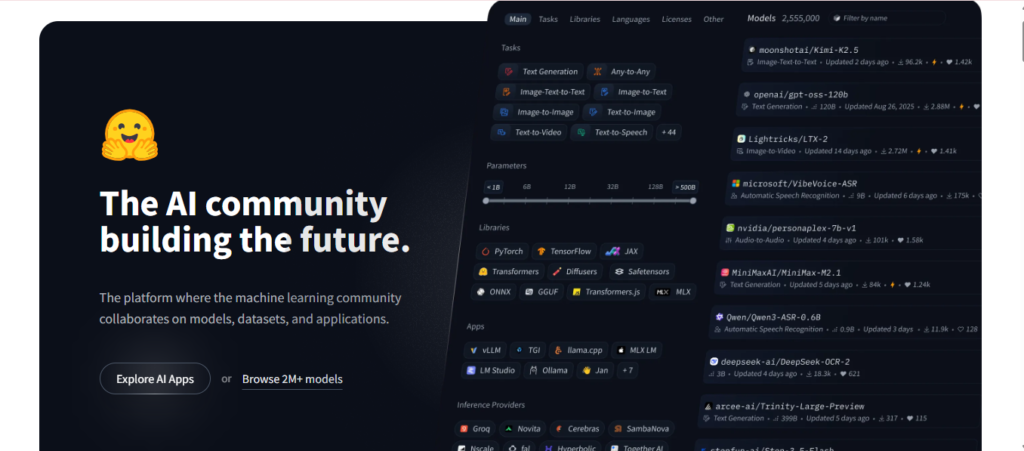
The good news: you don’t need to pay university tuition to get world-class AI education. These are the best platforms right now:
Free Platforms
- Google’s Generative AI Learning Path (cloud.google.com/learn) — covers AI fundamentals, prompt design, and responsible AI.
- Coursera — Andrew Ng’s Machine Learning Specialization is the most recommended AI course in the world. You can audit it for free.
- Fast.ai — practical deep learning for coders. Free, hands-on, and no math PhD required.
- Kaggle Learn — short, hands-on courses in Python, ML, and data science, completely free.
- YouTube — channels like Sentdex, 3Blue1Brown, and StatQuest explain AI concepts visually and for free.
- Hugging Face — open-source AI models, free courses, and a community of practitioners. Great for NLP and generative AI.
Low-Cost Platforms
- Udemy — frequently discounted to under $15 per course. Look for Python, data science, and ML courses.
- DataCamp — focused on data skills. Subscription-based but affordable.
- DeepLearning.AI — founded by Andrew Ng; short courses on specialized AI topics like LLMs, MLOps, and AI for everyone.
Certifications Worth Getting
- Google Professional Machine Learning Engineer
- AWS Certified Machine Learning — Specialty
- Microsoft Azure AI Engineer Associate
- IBM AI Engineering Professional Certificate (via Coursera)
These certifications won’t replace experience, but they show employers you’ve put in structured effort — and they’re recognized globally.
Build a Portfolio, Not Just a Resume
This is probably the most important piece of advice in this entire post.
In AI, your portfolio is your degree. Employers want to see that you can actually do things. Talk is cheap; GitHub repos and live projects are not.
Portfolio Project Ideas for Beginners
- Build a text classifier — train a model to sort emails or reviews as positive or negative.
- Create a simple chatbot — using Python and an API like OpenAI’s, build a bot that answers questions about a topic you know.
- Build a data dashboard — take a public dataset (Rwanda’s climate data, African economic indicators) and visualize it with Python or Power BI.
- Fine-tune a language model — take an open-source model from Hugging Face and customize it for a specific task.
- Automate something real — use AI to build a tool that solves a problem in your own life or community.
Pro Tip for African Job Seekers Building projects that solve local problems can actually set you apart. An AI tool trained on Kinyarwanda, Swahili, or Amharic data — or one that addresses agriculture, healthcare, or education challenges in Africa — shows both technical skill and real-world relevance. That combination is rare and valuable.
Real Talk: What the Hiring Process Actually Looks Like
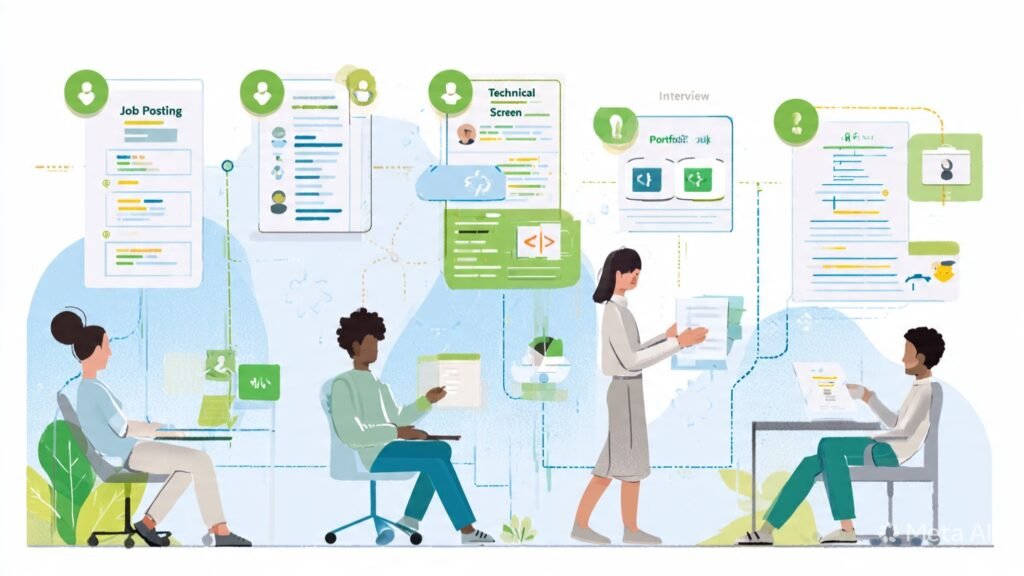
Here’s what typically happens when a company is hiring for an AI role:
- They post the job with a list of requirements (often including a degree — which may be flexible).
- They screen resumes or LinkedIn profiles for keywords and experience.
- They do a technical screen — usually a coding challenge, a take-home project, or questions about ML concepts.
- If you pass, there’s an interview — often including a problem-solving exercise or walkthrough of your portfolio.
- They make an offer based on skills and what you demonstrated, not your diploma.
That step 3 — the technical screen — is where you prove yourself. And if you’ve done the work, practiced, and built your portfolio, you can pass it with or without a degree.
Some companies do still list ‘Bachelor’s degree in Computer Science or related field’ as a requirement. But many have moved to phrases like ‘or equivalent experience.’ That phrase is your green light.
Getting Into AI From Africa: Specific Opportunities
If you’re based in Rwanda, Kenya, Nigeria, Ghana, Ethiopia, or anywhere else in Africa, the AI landscape has real and growing opportunities — and a few unique entry points.
Remote AI Jobs
Because most AI work is done online, geography is less of a barrier than it used to be. Platforms where you can find remote AI roles include:
- LinkedIn — filter by ‘Remote’ and keywords like ‘AI trainer,’ ‘data labeler,’ ‘prompt engineer.’
- Upwork and Toptal — freelance platforms with growing AI-related project categories.
- Remotasks and Scale AI — both hire globally for AI data labeling and feedback roles.
- Andela — focused specifically on connecting African tech talent to global companies.
- Turing.com — vetted remote jobs for developers, including ML engineers.
Local and Regional Opportunities
- Rwanda’s AI Policy and growing tech ecosystem in Kigali is creating local demand for AI talent.
- iHub (Kenya), CcHub (Nigeria), and similar innovation hubs run programs and connect talent to employers.
- The African Union’s AI strategy is driving government and NGO investment in AI across the continent.
- EdTech and HealthTech startups across Africa are actively integrating AI and hiring people who understand it.
Competitions and Community
- Zindi.africa — Africa’s leading data science competition platform. Winning or placing well here is a credible signal to employers.
- Kaggle — global competitions with cash prizes and community recognition.
- Google Developer Groups and AI communities on WhatsApp and Discord — great for networking and staying updated.
Frequently Asked Questions
Can I really get hired at a big tech company without a degree?
Yes. Google, Apple, IBM, and many other large tech companies have officially removed degree requirements for many roles. What they’re evaluating is your ability to do the job.
How long does it take to become job-ready in AI?
It depends on the role. For entry-level data labeling or AI content work: 1–3 months. For a junior data analyst role: 4–8 months of consistent learning. For a machine learning engineer role: 12–24 months of dedicated study and portfolio building is more realistic.
Do I need to know math to work in AI?
For technical roles, some math is useful — especially linear algebra, statistics, and calculus. But you don’t need to master all of it before starting. Tools and libraries handle a lot of the math automatically, and you can deepen your understanding as you go.
What’s the fastest way to get my first AI job?
Start with accessible entry points: AI data labeling, AI content writing, or prompt engineering. These require less technical depth but still get you working in the industry. From there, you can grow into more technical roles.
Are AI jobs sustainable or just hype?
AI is not a bubble in the traditional sense. The technology is becoming embedded in nearly every industry — healthcare, agriculture, finance, education, logistics. Demand for AI skills is expected to grow for at least the next decade. That said, the specific roles will evolve, so staying adaptable and continuously learning is key.
What if I don’t have stable internet access?
Many learning resources can be downloaded for offline use. Mobile-first platforms like Coursera and YouTube work on low bandwidth. Downloading course materials when you have connectivity is a practical workaround used by many learners across Africa.
Your 90-Day Action Plan to Get Started
Stop overthinking it. Here’s a simple plan you can start today:
Days 1–30: Build Your Foundation
- Complete Python basics on Kaggle Learn (free, takes about 2–3 weeks).
- Watch 3Blue1Brown’s ‘Neural Networks’ series on YouTube to understand how AI actually works.
- Create a GitHub account and a LinkedIn profile — these are your professional home bases.
Days 31–60: Go Deeper
- Start Andrew Ng’s Machine Learning course on Coursera (audit for free).
- Build your first portfolio project — keep it simple. A sentiment classifier or a data visualization is enough.
- Join Zindi.africa and participate in a beginner-level competition.
Days 61–90: Go Public
- Post your project on GitHub and write about it on LinkedIn.
- Apply to three entry-level positions — AI trainer, data labeler, or AI content writer.
- Connect with five people working in AI in Africa via LinkedIn. Ask a question, not a favor.
Remember This Everyone who works in AI today started somewhere they didn’t know anything. The difference is they started. Ninety days from now, you’ll either be further along — or exactly where you are. The only thing standing between those two outcomes is a decision.
Final Thoughts
The question was: can you get an AI job without a degree?
The answer is yes — with conditions. For most AI roles, skills, projects, and the ability to learn fast matter more than your academic credential. For highly specialized research roles, advanced education is still part of the picture. But research jobs are the minority.
The majority of AI jobs — the ones that are actually hiring right now, that pay well, that you can do remotely from Kigali or Lagos or Accra — are open to people who can demonstrate competence. And competence is something you build, not something you’re born with or handed in a classroom.
The AI revolution doesn’t care where you went to school. It cares what you can do. Start building.
The discussion in “Can You Really Get An AI Job Without A Degree In 2026?” is clear and useful. The supporting details make the main points much easier to understand. https://gfxforge.io/