
I almost missed this opportunity completely.
A few months ago, a friend sent me a link to a platform called Remotasks. “You can earn money just by labeling images,” she said. I laughed. That sounded too simple to be real — and honestly, it sounded boring.
But then I tried it. And within my first week, I had completed enough tasks to earn my first online payment. No interview. No degree. No coding. Just focus and an internet connection.
That experience changed how I see the AI industry — because it showed me that there’s a whole invisible layer of human work happening behind every AI product. And a lot of that work is being done by people just like us, in Africa, from their phones and laptops.
That invisible layer is called data annotation. And in this guide, I’m going to break it all down — what it is, why AI companies pay real money for it, and exactly how you can get started today even if you have zero technical background.
Quick Summary: Data annotation is the process of labeling raw data — like text, images, or audio — so AI systems can learn from it. It’s one of the most beginner-friendly ways to earn money online with AI in 2026, requiring no coding experience or expensive equipment.
Imagine you’re training a dog. You don’t just tell it to “be good.” You show it what good behavior looks like — sit, stay, reward, repeat. AI works the same way. But instead of treats, it needs millions of labelled examples to learn from. That’s exactly what data annotators provide.
Here is my full post about how AI works: What Is Artificial Intelligence? A Simple and Powerful Beginner’s Guide (2026)
If you’ve been looking for a real, honest way to start earning money online — especially using AI tools — data annotation is one of the most accessible entry points available today. No degree required. No coding skills needed. Just focus, clear thinking, and good written communication.
Let’s break it all down.
What Is Data Annotation?
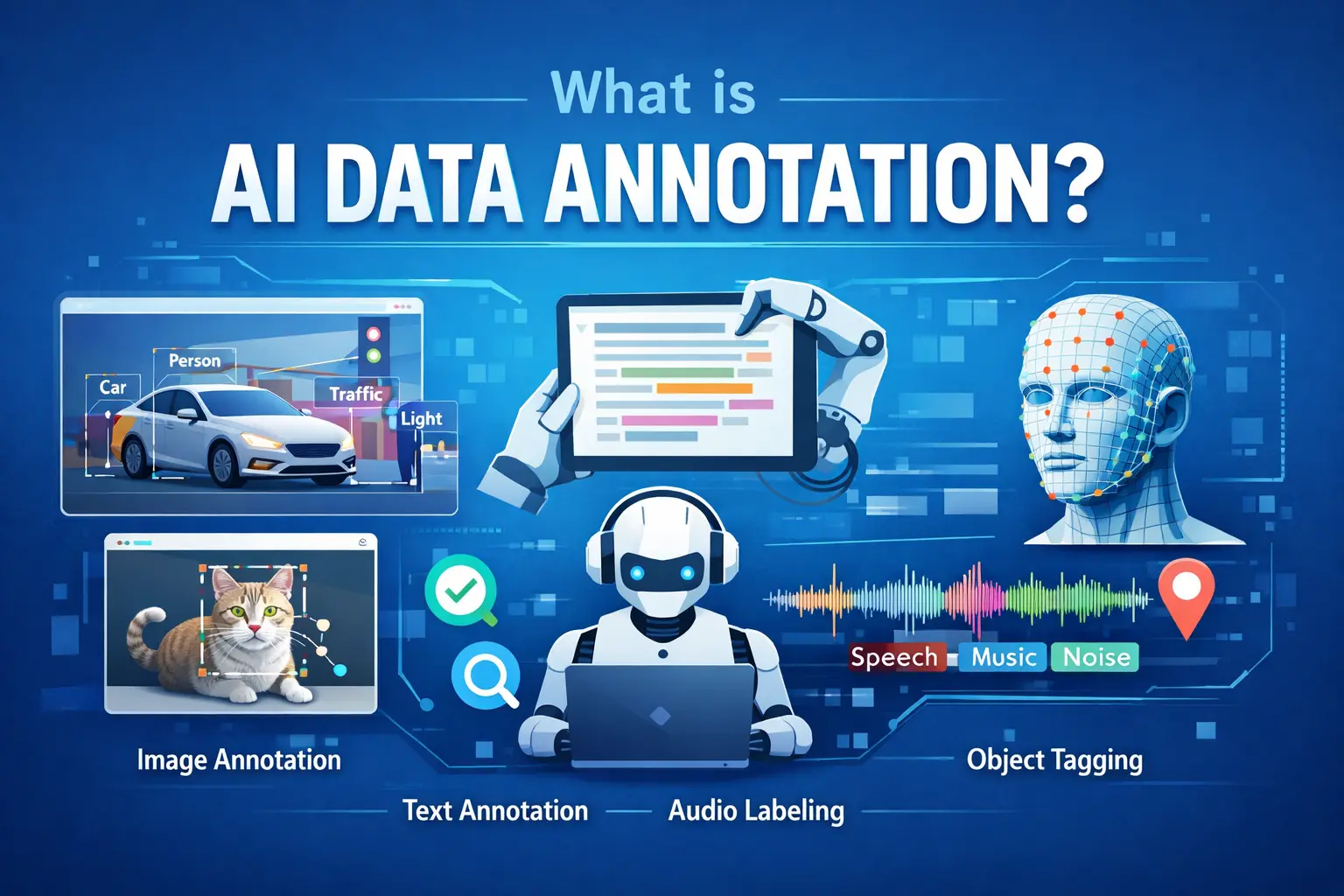
Data annotation (also called data labeling) is the process of adding meaningful tags, labels, or notes to raw data so AI models can understand and learn from it.
Think of it this way: an AI that needs to recognize photos of cats doesn’t know what a cat is. Humans have to look at thousands of images and label them: “cat,” “not a cat,” “cat sitting,” “multiple cats.” After seeing enough labelled examples, the AI starts to figure it out on its own.
The same logic applies to language models like ChatGPT or Claude. These systems were trained partly by humans who read AI-generated responses and rated them — marking which answers were helpful, accurate, or safe. That’s data annotation too.
💡 Real Example: When you use Google Maps and confirm that a business is open or closed, you are doing a simple form of data annotation. You’re helping a machine learning system stay accurate.
Why AI Companies Need It So Badly
The global AI market is growing fast — and so is the demand for quality training data. Every new AI product needs thousands of hours of human-labelled data before it can work reliably. No amount of automation has replaced this need entirely, because the work requires human judgment.
Here’s the thing: AI companies need people who can:
- Read text carefully and assess its quality or accuracy
- Follow detailed instructions precisely
- Notice subtle differences in meaning or tone
- Flag content that is harmful, misleading, or low quality
These are human skills. That’s why the demand for data annotators — especially skilled, reliable ones — remains strong even as AI advances.
Read also: 10 Best AI Careers You Can Start Today (No Degree Required)
Types of Data Annotation Work
Not all annotation jobs are the same. Here are the most common types you’ll encounter on platforms today:
| Type | What You Do | Difficulty |
|---|---|---|
| Text Classification | Label text as positive/negative, spam/not spam, relevant/irrelevant | Easy |
| Sentiment Analysis | Rate the emotional tone of a piece of writing | Easy |
| AI Response Rating | Compare two AI answers and pick the better one, explaining why | Medium |
| Prompt Writing | Write good prompts and high-quality AI responses for training data | Medium–Hard |
| Content Safety Review | Flag harmful, offensive, or policy-violating content | Medium |
| Named Entity Recognition | Identify people, places, organizations in text | Easy–Medium |
| Image Labeling | Draw boxes around objects or classify what’s in photos | Easy |
| Audio Transcription | Convert spoken words to accurate written text | Medium |
If you’re a strong writer or reader, text-based annotation tasks — especially AI response rating and prompt writing — tend to pay the most and match well with language skills.
What Skills Do You Need?
This is the part most people are pleasantly surprised by. Data annotation is one of the few online income opportunities where your existing skills are often enough to get started.
Essential skills:
- Strong reading comprehension — You need to understand instructions carefully and apply them consistently
- Good written English — Many tasks require you to explain your decisions or write feedback
- Attention to detail — Small errors in labelling can affect AI training quality
- Patience and consistency — Annotation work can be repetitive; quality matters across long sessions
Helpful but not required:
- Domain knowledge in a specific field (medicine, law, coding) — can unlock higher-paying specialist tasks
- Experience with writing or journalism
- Fluency in multiple languages
✅ Good news: Most platforms provide guidelines and training tasks before you start earning. You don’t need to know everything on day one — you learn as you work.
Best Platforms to Get Started in 2026
There are several reputable platforms that hire remote data annotators globally. Here are the best ones for beginners:
1. Outlier (by Scale AI)
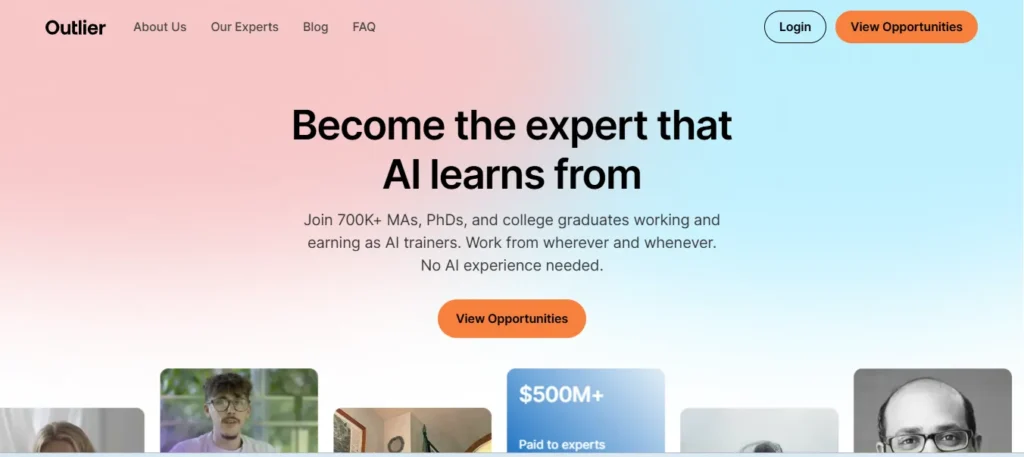
Outlier is one of the most recommended platforms for beginners, especially for text and AI training tasks. It focuses heavily on prompt writing and AI response evaluation. The pay tends to be higher than image-labeling platforms because the work requires more skill. You apply through their website, complete a short qualification test, and get onboarded to available projects.
2. Appen

Appen is a long-established platform with a wide variety of tasks — from search result rating to audio transcription and image labeling. It’s available in many countries and pays via PayPal. A good starting point for absolute beginners.
3. Toloka (by Yandex)
Toloka offers a wide range of short micro-tasks. Great for building experience quickly, though individual task pay is lower. You can complete tasks on their web platform or mobile app.
4. Remotasks
Remotasks offers free training before you start working, which makes it very beginner-friendly. They focus on image annotation, lidar data labeling, and AI chatbot tasks. Payment is weekly via PayPal or other options.
5. Labelbox / CloudFactory
These platforms tend to work with more experienced annotators, but they’re worth exploring once you have some experience under your belt.
⚠️ Tip: Apply to 2–3 platforms at the same time. Availability of tasks fluctuates — having multiple accounts keeps your income more consistent.
How Much Can You Earn?
Earnings vary widely depending on the platform, the type of task, and your speed and accuracy. Here’s a realistic picture:
| Platform / Task Type | Typical Rate | Monthly Estimate (Part-Time) |
|---|---|---|
| Basic image labeling (Toloka, Remotasks) | $3–$8/hr | $60–$200 |
| Search result rating (Appen) | $5–$12/hr | $100–$350 |
| AI response rating (Outlier) | $10–$20/hr | $200–$600 |
| Prompt writing / AI training (Outlier, specialist) | $15–$35/hr | $400–$1,200+ |
These are part-time estimates for someone working 10–20 hours per week. The more skilled your writing and reasoning, the more you can earn — especially on platforms like Outlier that reward quality.
The key insight: data annotation is not a get-rich-quick path. But it is a real, legitimate income stream that you can start this week with zero upfront investment.
Tips to Get Accepted and Earn More
Many people apply to annotation platforms and give up when they don’t pass the initial tests. Here’s how to avoid that:
- Read the guidelines more than once. Most qualification tests fail people who rush. The guidelines are your rulebook — treat them seriously.
- Do the practice tasks slowly. Speed matters eventually, but accuracy matters first, especially at the start.
- Write clear, complete explanations. On tasks that ask you to explain your rating, be specific. Don’t write “This answer is good.” Write “This answer is better because it directly addresses the question, provides a clear example, and avoids unnecessary repetition.”
- Maintain a consistent quality score. Many platforms track your accuracy over time. A high score unlocks better-paying tasks.
- Apply regularly. Some platforms open applications in batches. If you’re rejected, try again in a few weeks.
🚀 Pro tip: If you have a background in writing, teaching, research, or any technical field, mention it in your application. Specialists earn significantly more on platforms like Outlier.
Frequently Asked Questions
Is data annotation available in Africa and Rwanda?
Yes. Most major platforms including Appen, Outlier, and Remotasks accept workers from many African countries including Rwanda. Payment methods include PayPal, Payoneer, and bank transfers. Always check the specific platform’s country availability before applying.
Do I need a degree to do data annotation work?
No. Most platforms don’t require a degree. What matters is your ability to follow instructions carefully, read well, and communicate clearly. That said, having a degree or expertise in a relevant field (like medicine, law, or programming) can help you qualify for specialist, higher-paying tasks.
How long before I start earning?
If you’re accepted and tasks are available, you can start earning within your first week. The onboarding process — applying, completing the test, getting approved — typically takes 3 to 14 days depending on the platform.
Can I do data annotation alongside a full-time job?
Yes, and many people do. Most platforms are fully flexible — you log in when you want and work at your own pace. The trade-off is that the best tasks sometimes have limited availability and are claimed quickly by other annotators.
Is data annotation a long-term career?
It can be a good starting point, but most people use it as a launchpad. The skills you build — prompt writing, AI evaluation, structured reasoning — transfer well into prompt engineering, AI consulting, and content creation roles that pay significantly more.
Final Thoughts
Data annotation is not glamorous work. But it is honest, flexible, and genuinely accessible — especially if you have strong reading and writing skills. In a world where every AI company is racing to train better models, the demand for skilled human annotators is real and growing.
If you’re looking to start your AI income journey with something practical and low-barrier, this is one of the best places to begin.
Your first step: Head to Outlier.ai or Appen.com, create a free account, and complete their qualification task. That’s it. Everything else follows from there.
Is Data Annotation Right for You?
Before you jump in, let me be honest about who this works best for — and who might find it frustrating.
Data annotation is a great fit if you:
- Have a reliable internet connection (even if it’s not fast)
- Can read and write English at a conversational level
- Are patient and detail-oriented — this work rewards careful attention
- Can follow written instructions precisely
- Want flexible work you can do from anywhere, including Rwanda, Kenya, Nigeria, or Ghana
It may not be the best fit if you:
- Need a large income immediately — earnings start modest and grow with experience
- Prefer creative or social work — annotation can be repetitive
- Don’t have a PayPal or Payoneer account — most platforms pay through these
If data annotation sounds like a good starting point, go ahead and sign up on Remotasks or Toloka today. The barrier to entry is genuinely low — and the learning curve is short. Within a week of consistent effort, you’ll have a real sense of whether it’s the right income path for you.
Good