
When I first started exploring AI tools and online businesses built around them, it felt like entering a completely different world.
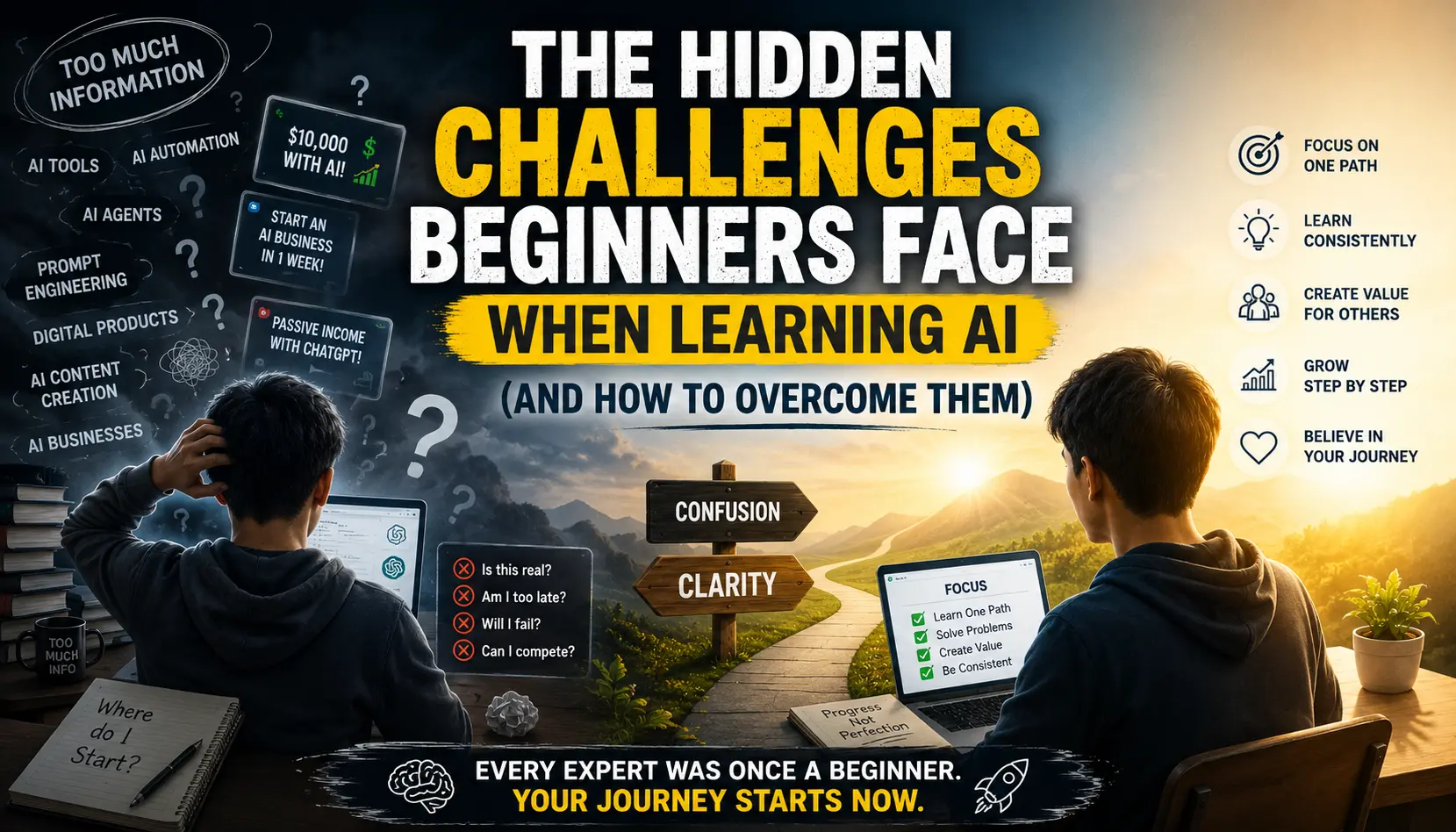
Everywhere I looked, someone was talking about AI automation, AI content creation, AI agents, or prompt engineering. The more videos I watched and articles I read, the more confused I became. Ideas were flying in every direction, and I had no clear sense of where to start.
And then there was the other problem — how simple everyone made it sound.
You hear things like:
“I make money writing blog posts with AI.” “I created a digital product with AI in one day.” “I started an AI agency with zero experience.”
At first, it almost sounds too easy. And naturally, questions start creeping in:
If this actually works, why isn’t everyone doing it? Is this real or just internet hype? How will I compete when thousands of people are already ahead of me? What if I spend months learning and still fail?
These thoughts are extremely common for beginners, but almost nobody talks about them honestly. Most online content only shows success stories, income screenshots, and fast results. Very few people discuss the confusion, self-doubt, and information overload that come with actually learning AI from scratch.
That is why I am writing this post. If everything feels overwhelming right now, you are not behind. You are just beginning.
The Problem of Information Overload
One of the biggest challenges beginners face when learning AI is simply having too much information available.
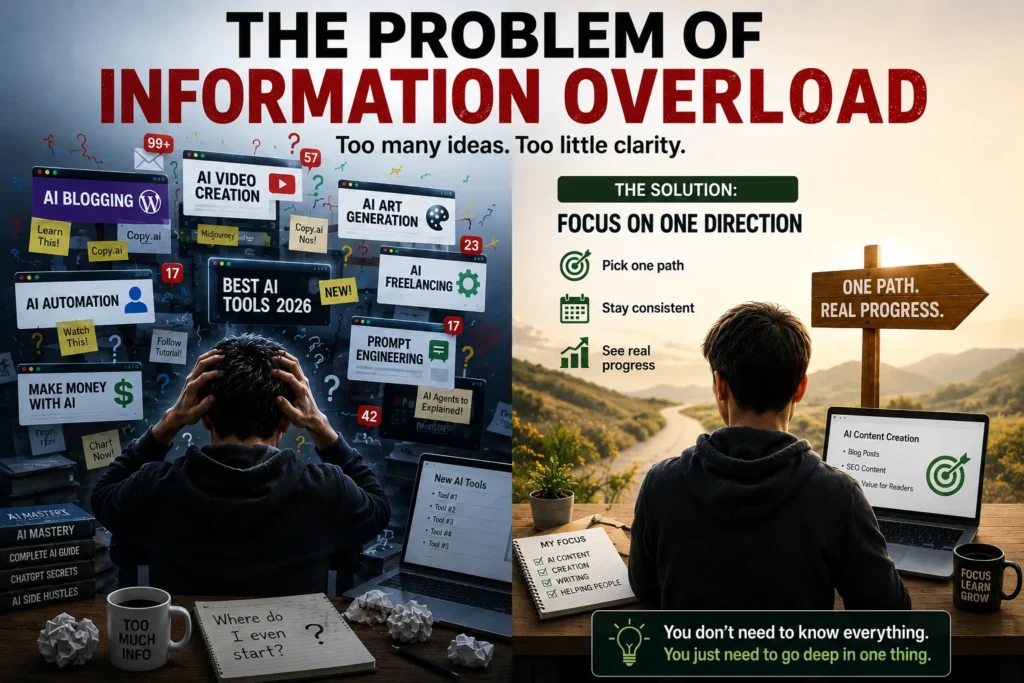
AI is growing extremely fast. Every week, new tools appear, new business models come up, and new “experts” start giving advice online. Because of this, beginners often jump from one idea to the next without building any real understanding.
In one afternoon, you might try to learn AI blogging, AI video creation, AI freelancing, AI art, and AI automation — all at once. A few hours later, your brain is exhausted and you have not actually learned anything deeply.
I personally noticed that the internet makes AI look much simpler than it is. A 30-second video can make something look easy, but behind it there are usually months of practice and failure that nobody shows you.
What actually helps: Pick one direction and stay with it long enough to see real progress.
If you enjoy writing, focus on AI content creation. If you like visuals, explore AI design. If you want to help businesses, look into AI automation. You do not need to master every tool. You only need to become genuinely useful in one area first.
AI Success Stories Can Create Unrealistic Expectations

Social media is full of content like:
“How I made $10,000 with AI.” “This AI side hustle changed my life.” “Make passive income using ChatGPT.”
What these posts rarely show is the failed attempts, the months without results, the burnout, and the slow learning process that happened before the success.
This matters because it can make beginners feel like they are failing when they are actually progressing completely normally.
The truth is that learning AI is still learning a skill. Every skill takes time. Some people see results faster because they already had marketing experience, design skills, an existing audience, or a business background. A beginner starting from zero should not compare themselves to someone who spent years building those foundations.
The mindset shift that helped me most was stopping to see AI as “magic money” and starting to see it as a tool. Just like a camera does not automatically make someone a great photographer, AI does not automatically create success. The real value still comes from creativity, consistency, and solving real problems for real people. AI just makes the process faster.
The Fear of Starting Too Late
This is probably the fear most beginners carry quietly.
When you see thousands of people already using AI tools, building AI businesses, and posting results online, it is easy to feel like you missed the opportunity.
But here is what I noticed after paying closer attention: most people still do not use AI effectively.
Many people copy what others are doing. They create the same content, the same products, and the same ideas without any originality. That means there is still a real opening for people who can bring their own personality, perspective, and lived experience to what they create.
Your life experiences are yours alone. Your way of explaining things is unique. The audience that connects with your voice will not connect the same way with someone else’s. AI can help you generate and organize content, but it cannot replace the human perspective behind it. That is where your value lives.
Waiting for “Perfect” Will Keep You Stuck
Another pattern I see often is beginners waiting until they feel completely ready before they start.
They want the perfect niche, the perfect blog, the perfect AI workflow, the perfect product idea. But the longer you wait for perfect, the longer you stay in the same place.
The people who move fastest are usually the ones who start before they feel confident. Your first blog post may not be great. Your first digital product may not sell immediately. That is completely normal. Most creators improve through repetition, not perfection. The internet shows you the polished final result — almost never the messy first attempt that made it possible.
Learning Without a Clear Purpose Creates Frustration
Sometimes beginners spend hours testing random AI tools without applying them to anything meaningful. They learn but never actually do anything with what they learn. This creates a kind of stagnation that feels like failure but is really just a lack of direction.
A better approach is to connect your AI learning to a real goal.

Use AI to improve your writing. Use AI to help create content for a blog or social media. Use AI to research ideas, draft products, or save time on tasks you already do. When your learning is attached to something concrete, it becomes easier to stay motivated and measure actual progress.
Mindset Matters More Than the Tools
This may sound surprising, but mindset is often more important than which AI tools you use.
Many beginners spend a lot of time searching for the newest app, the best prompts, the perfect strategy. But tools change constantly. The people who tend to succeed long-term are the ones who develop patience, adaptability, consistency, and a genuine curiosity to keep learning.
AI is moving fast, which means nobody knows everything forever. Even people who have been in this space for years are still learning. So if you feel confused sometimes, that is not a sign that you are failing. It just means you are learning inside a fast-moving field — which is exactly where the opportunities are.
Final Thoughts
Learning AI as a beginner can feel overwhelming, especially when the internet makes everything look easy and fast. You may feel buried in information. You may question whether the opportunities are real. You may wonder if there is still space for someone like you.
But here is the honest truth: every person who understands AI today was once exactly where you are now.
Nobody starts with complete understanding. Most people learn step by step — through curiosity, experimentation, mistakes, and practice. You do not need to master everything. You do not need to compete with everyone. You just need to start somewhere, stay consistent, and give yourself the time to grow.
AI is not only about technology. It is about learning how to create, adapt, and think differently in a world that keeps changing.
And sometimes, the hardest part is simply believing that you belong in that world too.