

Let me be honest with you: when I first started exploring how to make money with AI, I went down a rabbit hole of confusing advice, overhyped promises, and strategies that had no idea who I actually was — a beginner with a laptop, an internet connection, and a whole lot of questions.
Sound familiar?
Here’s the thing — AI has genuinely opened a door that didn’t exist a few years ago. You don’t need a degree. You don’t need a technical background. And you definitely don’t need a big budget to get started. What you do need is the right strategy — and that’s exactly what this guide is about.
I was watching a YouTube video when something stopped me in my tracks. The creator made one simple point that completely shifted how I think about earning online:
“Before creating any product or service, ask yourself: What problem does the client currently have, and how will your solution solve it? If your solution helps a business earn more money than it costs, they’ll gladly buy it.”— Tyler Moore, via YouTube
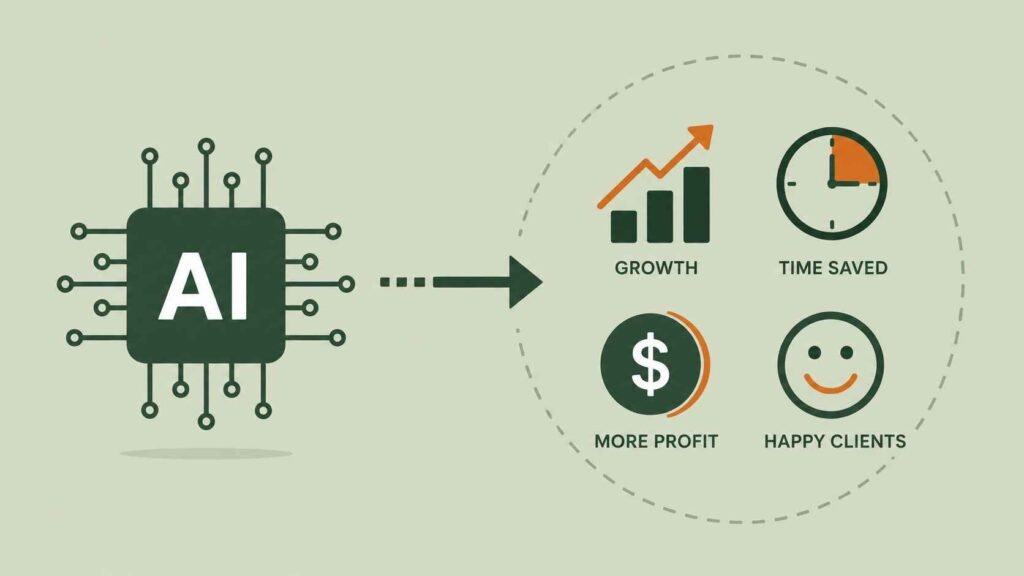
That advice applies perfectly to making money with AI in 2026. Most beginners make the same mistake: they chase the tools instead of the problems. But people don’t buy AI — they buy solutions. They buy time saved, revenue earned, and stress removed.
Keep that in mind as you read through these seven tips. Every single one is built around that idea.
⚡ TL;DR — Quick Summary
- Solve real problems — don’t sell “AI” as the product
- Pick one skill and go deep before branching out
- Target businesses, not just individuals — they pay more and need results
- Build a sample portfolio before you land your first client
- Stay curious and keep learning — the AI landscape moves fast
- Blend human creativity with AI output — that’s your edge
- Start imperfectly. The learning only happens by doing.
1. Solve Problems — Not “AI”
This is the most important mindset shift you can make, and I want to spend a moment on it because it’s where so many beginners go wrong.
When you start offering AI-powered services, the temptation is to lead with the technology. “I use ChatGPT!” “I generate content with AI!” But here’s the reality: your potential clients don’t care which tools you use. They care about one thing — results.
Think about it from their perspective. A small business owner isn’t searching for “someone who uses AI.” They’re searching for solutions to very specific, very real frustrations:
- They need blog posts that actually rank on Google
- They need social media content that saves them hours every week
- They need product descriptions that actually convert visitors into buyers
- They need email campaigns that bring customers back
Your job is to be the person who solves those problems — and to use AI as the engine behind your solution. The tool is invisible to the client. The result is everything.
So before you offer any service, always ask yourself: What specific problem am I solving? And how much is that problem costing someone right now? That’s where the opportunity lives.
2. Pick One Skill and Go Deep
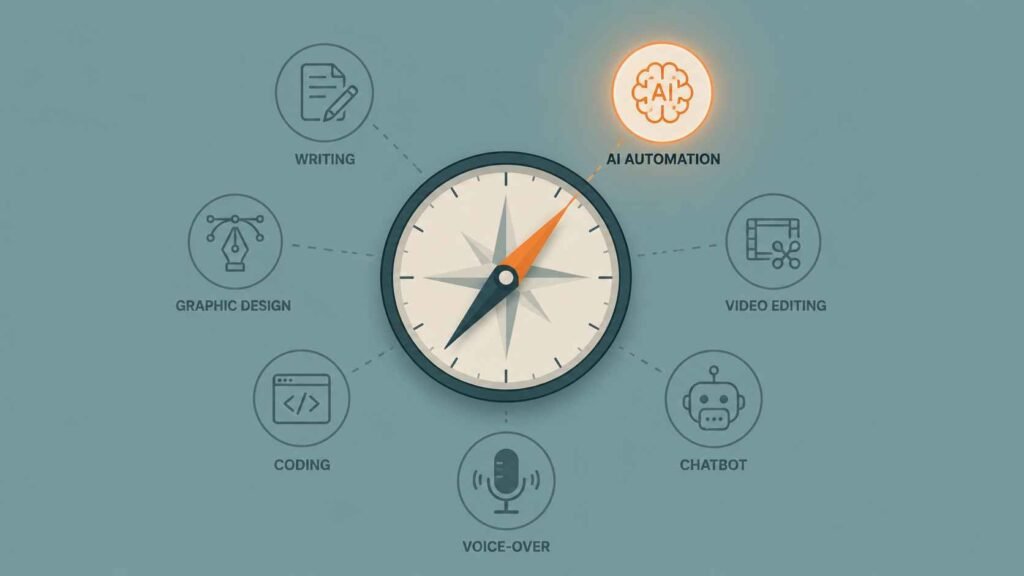
I know this might not be what you want to hear. When you first discover AI, it’s exciting — there are tools for writing, design, video, voice, automation, coding, and more. It feels like you could learn everything at once.
But here’s what actually happens when you try: you end up halfway decent at many things and truly good at none of them. And truly good is what clients pay for.
The beginners I’ve seen succeed fastest all have one thing in common — they went narrow before they went wide. They picked one AI-powered skill and got genuinely good at it before expanding into anything else. Some examples:
- AI content writing — blog posts, newsletters, product copy
- AI graphic design — logos, social media graphics, presentations
- AI video creation — faceless YouTube channels, product explainers
- AI voice-overs — narration for videos, e-learning content
- AI chatbot setup — helping businesses automate customer support
- AI presentation design — pitch decks, training materials
Which one feels most natural to you? That’s your starting point. Spend a few weeks getting genuinely skilled at it. Build samples. Understand what good output looks like. Then — and only then — think about branching out.
Want to understand the AI landscape before choosing your niche? Start with our guide, “What Is Artificial Intelligence?“ to build a solid foundation. Then read “How to Choose Your AI Freelance Niche as a Complete Beginner (2026 Guide)“ to discover the best niche for your skills and interests and confidently begin your AI freelancing journey.
3. Focus on Businesses, Not Just Individuals
There’s a real difference between offering your AI skills to everyday people versus small businesses — and it mostly comes down to budget and motivation.
Individuals might pay you $20 for a piece of work. A business might pay you $200 for the same type of work, because they see it as an investment with a measurable return. And that changes everything.
Think about it from the business owner’s point of view. If your AI-generated blog posts bring them three new customers per month, and each customer is worth $500, you’ve just created $1,500 in value. Why would they hesitate to pay you $300 a month for that?
The key is learning to frame your service as an investment, not a cost. Instead of saying “I write blog posts,” say “I create SEO content that helps your website attract more customers.” Instead of “I make social media posts,” say “I handle your social presence so you can focus on running your business.”
Small businesses — restaurants, coaches, local service providers, e-commerce brands, real estate agents — are all hungry for affordable, consistent content and marketing help. And AI lets you deliver it faster and more cost-effectively than anyone could five years ago.
4. Build a Portfolio Before You Look for Clients
Here’s something I wish someone had told me earlier: you don’t need paying clients to build a portfolio.
A lot of beginners wait. They think, “I’ll build samples once I have clients.” But clients want to see samples before they hire you. It’s a frustrating catch-22 — until you realize you can simply create your own samples.
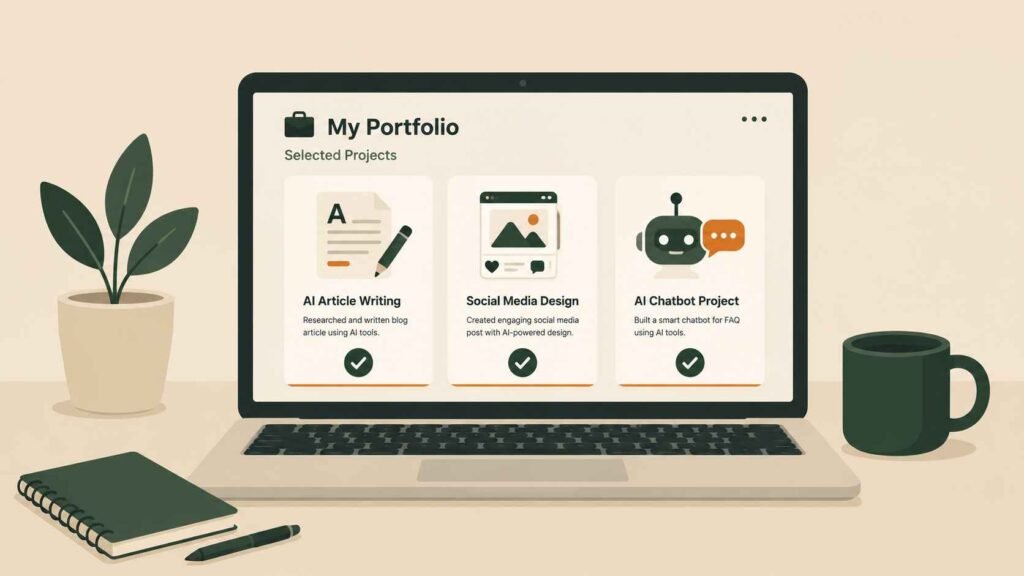
Use AI to build a small collection of work that shows exactly what you can do. If you’re offering AI content writing, write three or four blog posts in a specific niche. If you’re doing AI graphic design, create a set of sample social media graphics for a fictional business. If you’re building chatbots, build one and record a short demo.
Your portfolio becomes your proof of skill — and in many cases, it’s more persuasive than any words you could put on a proposal. A potential client who can see your work, read your writing, or watch your demo video already trusts you more than one who’s just heard about you.
Don’t wait for permission to start. Create the work, show what’s possible, and let the quality speak for you.
Are you worried about how to build an AI freelance portfolio when you have no experience, no clients, and no portfolio to showcase? Read my guide, “AI Freelance Portfolio for Beginners: How to Get Clients Without Experience in 2026,” to learn step-by-step how to create a portfolio that attracts clients—even if you’re just starting out. This guide answers your biggest questions and helps you land your first freelance opportunities.
5. Keep Learning — the AI Landscape Moves Fast
If there’s one truth about AI in 2026, it’s this: things change quickly. New tools launch every month. Existing tools add features. Pricing shifts. What worked six months ago might be replaced by something better today.
For a lot of beginners, this feels overwhelming. But here’s a reframe that helped me: constant change means constant opportunity. Every new tool is a chance to be an early adopter. Every new feature is a chance to offer something your competitors don’t yet know about.
You don’t need to master every new tool the moment it drops. But spending even 15–20 minutes a few times a week exploring what’s new keeps you ahead. Follow AI news. Try free tiers of new tools. Pay attention to what your target clients are asking about.
The people who will thrive in AI-powered income are the ones who treat learning as a habit, not a one-time event. Curiosity is a competitive advantage right now — and it costs nothing.
A great place to build that foundation is my guide on How to Start Learning AI With No Experience. It walks you through exactly where to begin.
6. Combine AI with Human Creativity — That’s Your Real Edge

Here’s something that doesn’t get talked about enough: AI is powerful, but it’s not magic. And the people who treat it like a magic button — paste prompt in, copy output out — are the ones who end up with generic, forgettable work.
The best AI-powered freelancers and creators don’t simply use AI outputs as the final product. They edit, refine, and personalize everything. They bring judgment, taste, and real-world context that AI doesn’t have.
Think about what only a human can contribute:
- Knowing what a particular client’s audience actually cares about
- Recognising when an AI response is technically correct but tonally wrong
- Adding a personal story or real-world example that makes content feel alive
- Understanding the emotional angle that makes a piece of marketing actually land
AI gives you speed and scale. Your creativity and judgment give the work quality and character. Together, that combination is genuinely hard to replicate — and clients will pay for it.
Understanding how to direct AI effectively is a skill in itself. If you want to get better at it, my beginner’s guide to prompt engineering is worth your time — it’s one of the highest-leverage skills you can build right now.
7. Take Action Before You Feel Ready
This is the one I want to linger on, because I see it hold so many people back — including me, early on.
There’s a pattern that traps a lot of beginners: watching tutorials, taking notes, researching tools, learning more, watching more tutorials — and never actually doing anything. The pursuit of “being ready” becomes the reason for not starting.
But here’s what I’ve learned: you don’t get ready and then start. You start, and that’s how you get ready.
Your first piece of work won’t be perfect. Your first client might give you feedback that stings a little. Your first attempt at a new tool will probably feel awkward. That is completely, utterly normal. Every skilled person you look up to went through the exact same thing — they just don’t show you that part.
What separates beginners who eventually succeed from those who stay stuck is simple: the ones who succeed shipped something. They tried. They learned from real experience, not from another hour of preparation.
Start with one tool. Offer one service. Help one person. That first step teaches you more than any tutorial ever could.
And if you want to understand the mindset challenges that come with learning AI — because they’re real, and nobody talks about them honestly — I wrote about them here: The Hidden Challenges Beginners Face While Learning AI.
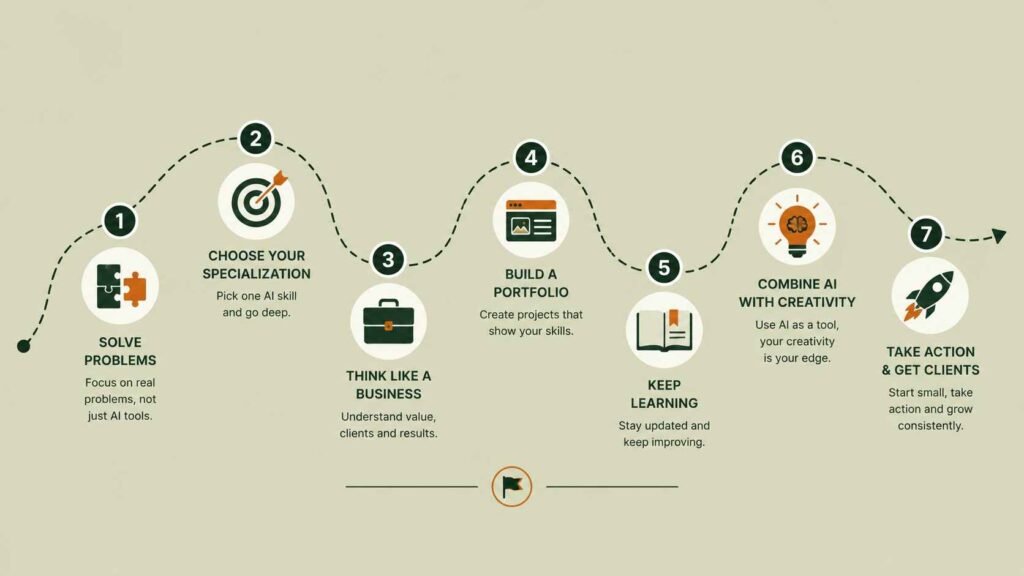
📌 Key Takeaways
- Sell solutions, not technology. Clients pay for results, not for knowing which AI tool you use.
- Go deep on one skill first. Mastery beats variety when you’re just getting started.
- Target businesses. They invest in solutions that show a return — and they pay accordingly.
- Build your portfolio now. Create sample work with AI before you ever have a paying client.
- Stay curious. Learning a little every week compounds into a real competitive advantage.
- Add your human judgment. AI gives you speed; your creativity gives the work lasting value.
- Start before you feel ready. Progress always beats waiting for perfect.
You’re More Ready Than You Think
Making money with AI in 2026 isn’t about becoming a programmer, earning an expensive degree, or understanding how large language models work under the hood. It’s about understanding people’s problems — and using AI to solve them more efficiently than they could on their own.
The lesson that kicked off this article says it simply: people don’t buy products. They buy solutions. And if your AI-powered service genuinely helps someone save time, reduce costs, or grow their income, you’ll always have something valuable to offer.
The door is open. The tools are accessible. The only remaining question is: which one of these seven tips will you act on first?
Drop your answer in the comments below — I’d genuinely love to know where you’re starting, and I read every single reply.
Want Tips Like This Every Week?
Join the Future Work Navigator newsletter — practical AI tools, income strategies, and beginner-friendly guides delivered straight to your inbox. No spam. No hype. Just the stuff that actually helps.