
TL;DR
You don’t need design skills to earn money with AI-generated images in 2026 — you need to know what buyers actually want. This guide covers 10 real, beginner-tested methods, what platforms actually require for disclosure, and honest expectations on timeline and earnings.
Picture this: you check your phone and see a payment notification. Someone just bought an image you created in about twenty minutes, a few days ago, while half-watching a show.
That sounds like a stretch, but it’s genuinely happening for a growing number of everyday creators — and most of them aren’t professional designers. In my post on free AI image generators, we covered the tools.
Here, let’s go a step further and look at how people are actually turning those images into income.
If you’ve wondered whether AI images can become a real income stream, the honest answer is yes — with realistic expectations. This guide walks through 10 genuine methods beginners are using in 2026, from passive stock income to freelance client work.
“The real skill today isn’t drawing or graphic design. It’s knowing what people want — and learning how to generate images that match that demand.”
Why 2026 Is Still a Good Time to Start
It’s easy to assume this space is already too crowded. It isn’t — what’s crowded is generic content.
Buyers aren’t short on generic images; they’re short on visuals that feel specific and relevant to their actual niche: technology blog imagery, small business social graphics, marketing visuals for startups, or lifestyle photos with genuine diverse representation. That gap is where the opportunity sits.
The tools have also caught up. Newer image models can now produce results that are hard to distinguish from professional photography. Which means the bottleneck isn’t the tool anymore — it’s understanding demand.
10 Real Ways to Make Money with AI Images
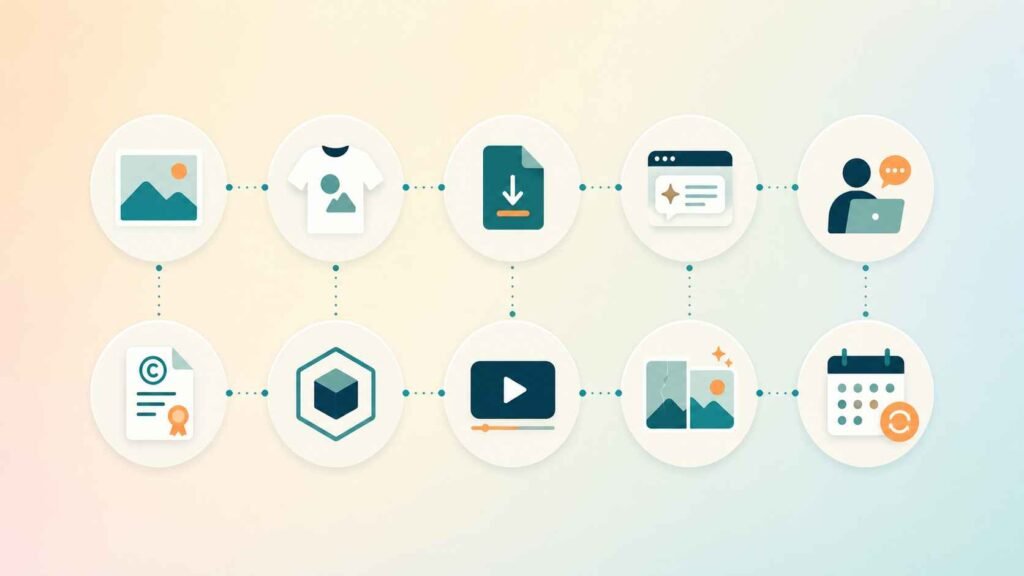
1. Sell on Stock Photo Platforms
The easiest entry point for most beginners. Upload to platforms like Adobe Stock, Shutterstock, Dreamstime, or Depositphotos, and earn a small royalty every time someone licenses your image.
Categories that consistently sell well: business and technology concepts, remote work scenes, healthcare visuals, and seasonal imagery.
Before creating, spend time browsing what’s already downloaded heavily on these platforms — look for topics with real demand but fewer contributors. That gap is your opening.
A well-optimized portfolio of 500 images can build toward a modest, steady passive income over time — but that’s a portfolio built over months, not a first-week result.
2. Print-on-Demand Products
Design a product, and platforms like Redbubble, Merch by Amazon, or Printful handle printing and shipping — you keep the margin.
AI art works well for posters, t-shirts, phone cases, and wall art. Don’t upload the raw AI output directly; a bit of layout or typography work in Canva usually makes the difference between a product that sells and one that doesn’t.
3. Sell Image Packs Directly
Selling directly through Gumroad, Payhip, or your own site gives you far better margins than royalties. Bundle themed images — aesthetic photo packs, background bundles, desktop wallpapers — and sell them as digital downloads.
Example: A digital download featuring 50 minimalist beige Instagram background images could be priced around $19 on platforms like Gumroad. Buyers are generally looking for cohesive, niche-focused collections rather than a random assortment of AI-generated images.
Typical bundles sell for $7-$47 depending on size — beginners usually start toward the lower end while building reviews and reputation.
4. Sell AI Prompt Packs
Sometimes the prompt itself is the product. A well-crafted prompt that reliably produces high-quality images saves buyers hours of trial and error. Packs like “100 prompts for realistic product photography” sell on Etsy, PromptBase, and Gumroad.
If writing strong prompts feels unfamiliar, our beginner’s guide to prompt engineering is the place to start, and these tools for improving your prompts can help you refine packs before selling them.
5. Offer AI Image Services to Businesses
Small businesses constantly need visuals — social posts, website banners, ad creatives — and most can’t afford a photographer or designer. Position yourself as a visual content creator, not an “AI artist”; it reads as more professional to a business owner.
Find clients on Upwork, Fiverr, LinkedIn, or local business groups — our guide to the best platforms to find AI freelance work covers this in more depth.
Monthly retainers for this kind of work commonly range $200-$600 per client — figures like this usually reflect an established freelancer with a few completed projects behind them, not a first client.
6. License Images for Commercial Use
Licensing pays more per image than stock royalties — companies pay for exclusive usage rights on book covers, app graphics, or packaging.
Platforms like Picfair and 500px support this directly. It takes longer to build than stock uploads, but one solid licensing deal can outweigh dozens of stock downloads.
7. Sell AI Art as NFTs
The NFT market has cooled from its peak but hasn’t disappeared — it’s smaller now and focused on genuine collectors.
If you enjoy experimental or artistic work, platforms like OpenSea, Foundation, and Objkt are still active. Success here depends heavily on building a real community around your process, not just listing pieces.
8. Start a YouTube Channel Teaching AI Image Creation
Teaching what you learn can build an audience faster than selling images directly — and that audience opens up ad revenue, affiliate links, and your own prompt packs or courses down the line. Screen-recording your process works fine; you don’t need to appear on camera.
9. Offer AI Photo Enhancement Services
An overlooked niche: AI tools can sharpen blurry images, restore faded color, and repair old or damaged photos. People are often glad to pay to restore a meaningful old photo — this works well marketed through Etsy or local community groups.
Typical rates run $15-$75 per photo.
10. Monthly Content Packs for Social Media Managers
Instead of one-off images, offer a subscription of 20-30 tailored visuals per month for a specific niche — real estate, wellness, restaurants, travel. A recurring model like this builds predictable income faster than one-time sales.
Typical packages run $99-$299 per month per client — again, a rate that tends to reflect a proven track record rather than a starting price.
Can Beginners Really Do This?
Yes, with realistic expectations. Most people who stay consistent see their first sale within a month or two.
Reaching a meaningful monthly income takes longer and usually speeds up once you understand what buyers actually want. Trying all 10 methods at once is a fast route to burnout — pick one or two and focus until you see traction.
Best AI Image Tools in 2026
| Tool | Best Known For | Beginner Friendly |
|---|---|---|
| 💬 ChatGPT Image Generation ⭐⭐ Editor’s Pick | Simple image creation inside ChatGPT with no extra software | ★★★★★ |
| 🎨 Adobe Firefly | Commercial-friendly AI images and excellent licensing | ★★★★★ |
| 🔤 Ideogram 3 | Outstanding text rendering inside generated images | ★★★★☆ |
| 🖌️ Midjourney v7 | High-quality artistic and cinematic artwork | ★★★☆☆ |
| 📷 Flux Kontext | Photorealistic image generation and editing | ★★★☆☆ |
| ✨ Magnific | Image upscaling and fine-detail enhancement | ★★★☆☆ |
If you’re just starting, ChatGPT’s built-in image generation or Adobe Firefly are the easiest on-ramps — simple interfaces and clear licensing terms. Save the more advanced, style-specific tools like Midjourney or Flux for once you know what look you’re going for.
Where to Sell: A Quick Comparison
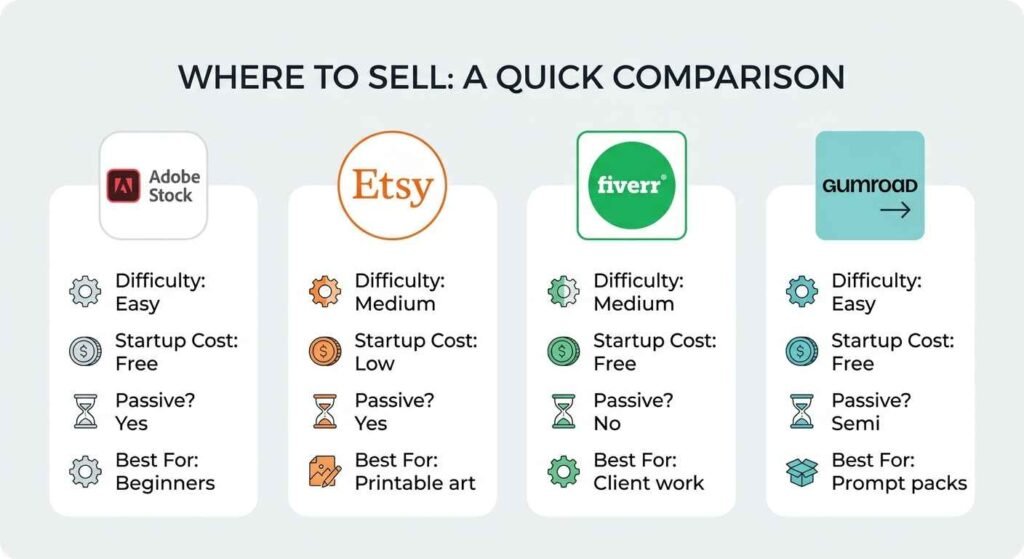
| Platform | Difficulty | Startup Cost | Passive? | Best For |
|---|---|---|---|---|
| Adobe Stock | Easy | Free | Yes | Beginners |
| Etsy | Medium | Low | Yes | Printable art |
| Fiverr | Medium | Free | No | Client work |
| Gumroad | Easy | Free | Semi | Prompt packs |
Is It Legal to Sell AI Images?
Generally, yes — but the specifics depend on each platform’s rules, and disclosure requirements are getting more specific, not less. Here’s roughly where things stand as of mid-2026:
- Adobe Stock: allows AI-generated content but requires it to be labeled as such at submission
- Shutterstock: has a dedicated AI content category and submission process
- Etsy: requires sellers to disclose when a listing includes AI-generated elements
- Gumroad: doesn’t mandate disclosure platform-wide, but honesty in your own listing description is still the safer practice
- Fiverr: generally fine for AI-assisted service work, but always disclose to individual clients if they ask directly
Rules shift as this space matures, so it’s worth checking each platform’s current terms before you list anything — and disclosure tends to build trust with buyers rather than costing you sales.
Frequently Asked Questions
Can beginners really sell AI images with no design background?
Yes. The core skill is understanding what buyers want and refining prompts to match — not manual design ability.
Which AI image generator is best for selling?
ChatGPT’s image generation and Adobe Firefly are the easiest starting points thanks to clear licensing. Midjourney and Flux suit more artistic or stylized work once you’re comfortable.
Can I sell images made with ChatGPT?
Generally yes, under OpenAI’s usage terms for paid plans — but always check current terms before listing commercially, since policies evolve.
Can I sell Midjourney images commercially?
Yes, on a paid Midjourney subscription, commercial use is generally permitted — again, confirm against their current terms of service.
Do I need Photoshop to sell AI images?
No. Free tools like Canva cover the light editing and packaging most beginners need.
Can AI-generated images be copyrighted?
This is genuinely unsettled in several jurisdictions and depends on how much human creative input was involved. It’s an evolving legal area, so don’t treat any single answer as final.
How much do AI stock images typically earn?
Individual royalties are small — often cents to a few dollars per download. Meaningful income comes from volume over a larger, well-optimized portfolio built over months.
Is Etsy good for selling AI art?
Yes, particularly for printable art and themed digital packs, as long as you follow Etsy’s AI disclosure requirement.
Key Takeaways
- Demand exists for specific, niche-relevant images — not more generic content
- Passive income (stock, licensing) and active income (client work, packs) are very different paths — pick based on your time
- Presentation (light editing, packaging) often matters more than the raw AI output itself
- Focus on one or two methods before spreading across all ten
- Always check platform-specific disclosure rules before selling
Final Thoughts
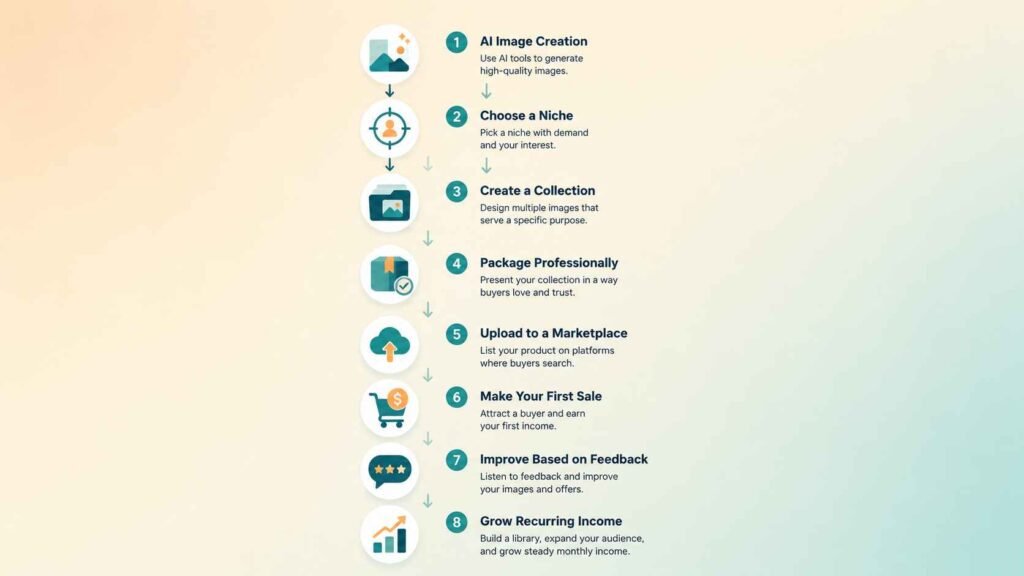
Opportunities like this don’t come along often. AI image tools have reached a point where nearly anyone can produce professional-quality visuals, while demand for digital content keeps growing.
So here’s the actual next step: pick one method from this list today. Spend an hour generating five images around it. Upload them this week. Don’t aim to make money immediately — aim to learn what buyers respond to. Your first sale will usually teach you more than reading ten more articles on this topic.
You don’t need to be a professional artist. What matters is curiosity, consistency, and paying attention to what people actually want.
文章说得很实在,现在AI出图早已过了“随便生成就能卖”的阶段,关键是找到没人做的细分需求。用DeepAI这类工具做图时,我一般会先到平台看热销榜再定主题,单纯堆量没用,还得在后期排版上加分。新手不建议一上来就做500张,先试水几个方向,看哪个反馈最好再集中发力。
Great point. I completely agree that finding underserved niches is much more valuable than producing hundreds of generic images. Testing a few ideas, learning what resonates, and then doubling down is a much smarter approach than chasing volume.
If you are already exploring AI image tools, the same mindset applies to music — knowing what people actually want matters more than having technical skills. A solid song creator online free can help you test ideas quickly without upfront costs, which is perfect for beginners who want to experiment before committing to paid software. The key is to focus on specific niches and real demand, just like with visual content.
I found the tip about looking for demand gaps instead of adding more generic images really helpful—it reframes the whole approach from “making images” to “solving a specific visual need.” For anyone exploring more personal or niche design directions, Tattoo AI is a useful tool for generating custom tattoo concepts and gathering visual inspiration before committing to a final product.
This is a good reminder that the brief still matters. Human direction is still important when the goal is a dependable visual workflow. That is where AI starts to feel like a workflow tool rather than a novelty.