
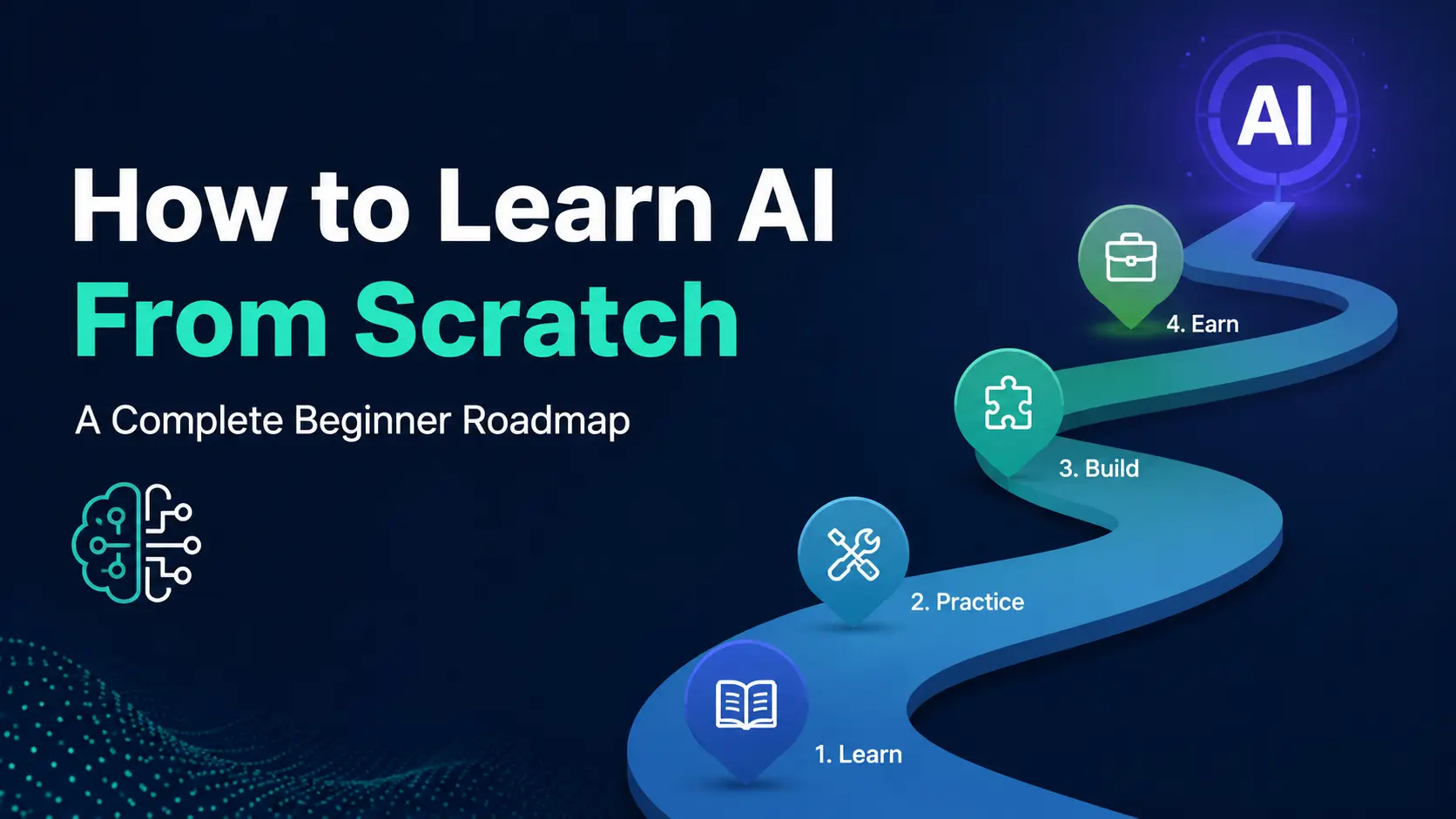
TL;DR You don’t need coding skills, a degree, or expensive courses to start learning AI. Open a tool like ChatGPT today and start experimenting — that teaches you more in an hour than a week of reading ever will. Learn basic prompting first, then pick ONE clear goal (earning income, growing your career, blogging, or automation) and let that single goal decide what you learn next. This guide is your roadmap — and it points you to the exact next article for whichever path you choose.
If you’ve been hearing about AI everywhere lately and still aren’t sure where to actually start — you’re not alone.
I was in that exact position. I’d seen the headlines, watched friends talk about tools I didn’t fully understand, and felt that mix of curiosity and confusion that’s hard to shake. I kept asking myself the same question: how do I actually learn AI from scratch, with no experience?
What I found surprised me — and it’s simpler than most guides make it sound. In this post, I’ll walk you through exactly how to start, and then point you toward the specific article that goes deeper on whatever you’re trying to achieve, whether that’s income, a career shift, a blog, or automation skills.
“You don’t need to be a tech expert to start using AI. You just need to start — one small, honest step today.”
What Is AI, Really? (A Beginner’s Definition)

Artificial intelligence is technology that lets machines do tasks that normally need a human — writing, analyzing data, creating images, or automating repetitive work. You don’t need to build this technology yourself.
You only need to learn how to use tools that already exist, like ChatGPT or Claude. That’s exactly where every beginner should start.
Key Takeaways
- AI is a tool you learn to use, not a system you have to build — zero coding required
- Hands-on practice beats watching tutorials; open a tool today instead of reading about it tomorrow
- How you prompt matters more than which specific tool you pick
- Choose ONE clear goal before you start learning — trying to do everything at once is the #1 reason beginners quit
- Beginners across Africa have a real, current window of opportunity, because most people around you aren’t using these tools yet
If you’re completely new to AI, start with our comprehensive guide: What Is Artificial Intelligence? A Simple, Honest Beginner’s Guide (2026).
What Mistakes Do Most AI Beginners Make?
A few patterns trip up almost everyone starting out. Here’s what I’d watch for:
- Trying to learn everything at once — pick one corner of AI and go deep, not wide.
- Believing you need to code first — tools like ChatGPT and Claude need zero code to produce real value.
- Watching tutorials without doing — for every video you watch, spend at least as much time practicing.
- Comparing your day one to someone else’s year three — measure your progress against last week, not a stranger’s highlight reel.
How Do You Actually Start Learning AI From Scratch?
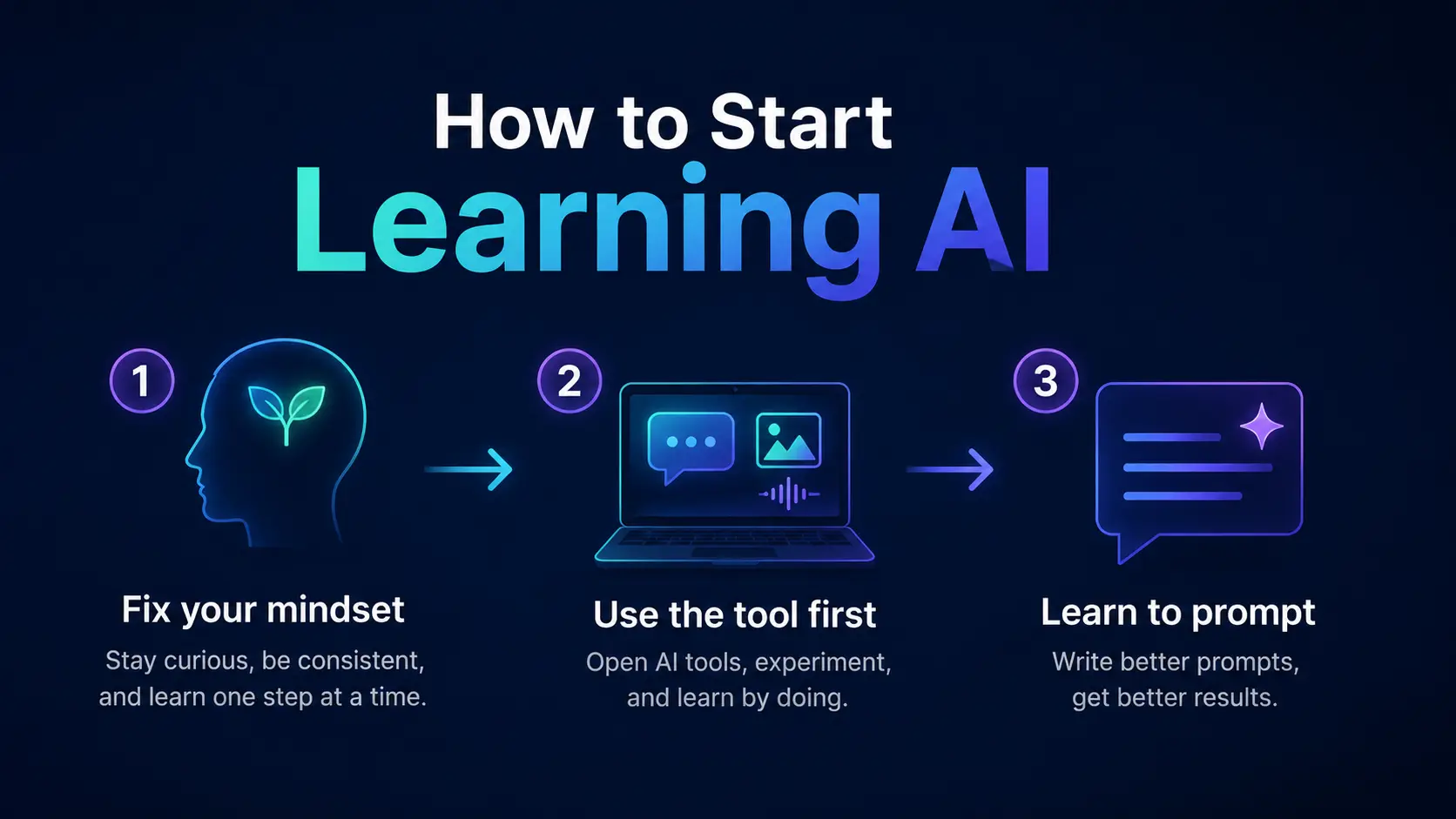
Step 1: Build the Right Mindset
Before you open your first AI tool, start by changing how you think about learning.
Instead of saying, “I don’t know anything about AI,” tell yourself, “I’m learning one step at a time.”
AI isn’t a test of intelligence or technical ability. The people who make the most of it aren’t always programmers or computer scientists—they’re curious, consistent, and willing to experiment. You don’t need to know everything before you begin. You just need to take the first step.
Step 2: Use AI Before You Study It
Many beginners spend hours reading articles and watching tutorials without ever opening an AI tool.
A faster way to learn is by doing.
Start a conversation with ChatGPT. Ask it to explain a topic, brainstorm ideas, or help you solve a problem. Try an AI image generator like Leonardo AI or Adobe Firefly to create simple visuals, or experiment with an AI voice tool to turn text into natural-sounding speech.
You’ll learn far more by interacting with AI for an hour than by spending a week reading about it.
Step 3: Master Prompting Before Chasing More Tools
The quality of your results depends on the quality of your instructions.
Learning how to write clear, detailed prompts is one of the most valuable AI skills you can develop as a beginner. Before jumping between dozens of AI tools, spend time practicing how to communicate effectively with the ones you already have.
Once you’re comfortable writing better prompts, you’ll be able to get more value from almost any AI tool you use.
For a deeper dive, read our complete guide: Master Prompt Engineering: The Best Beginner’s Guide to AI Prompts (2026).
Which ONE Goal Should You Choose Next?
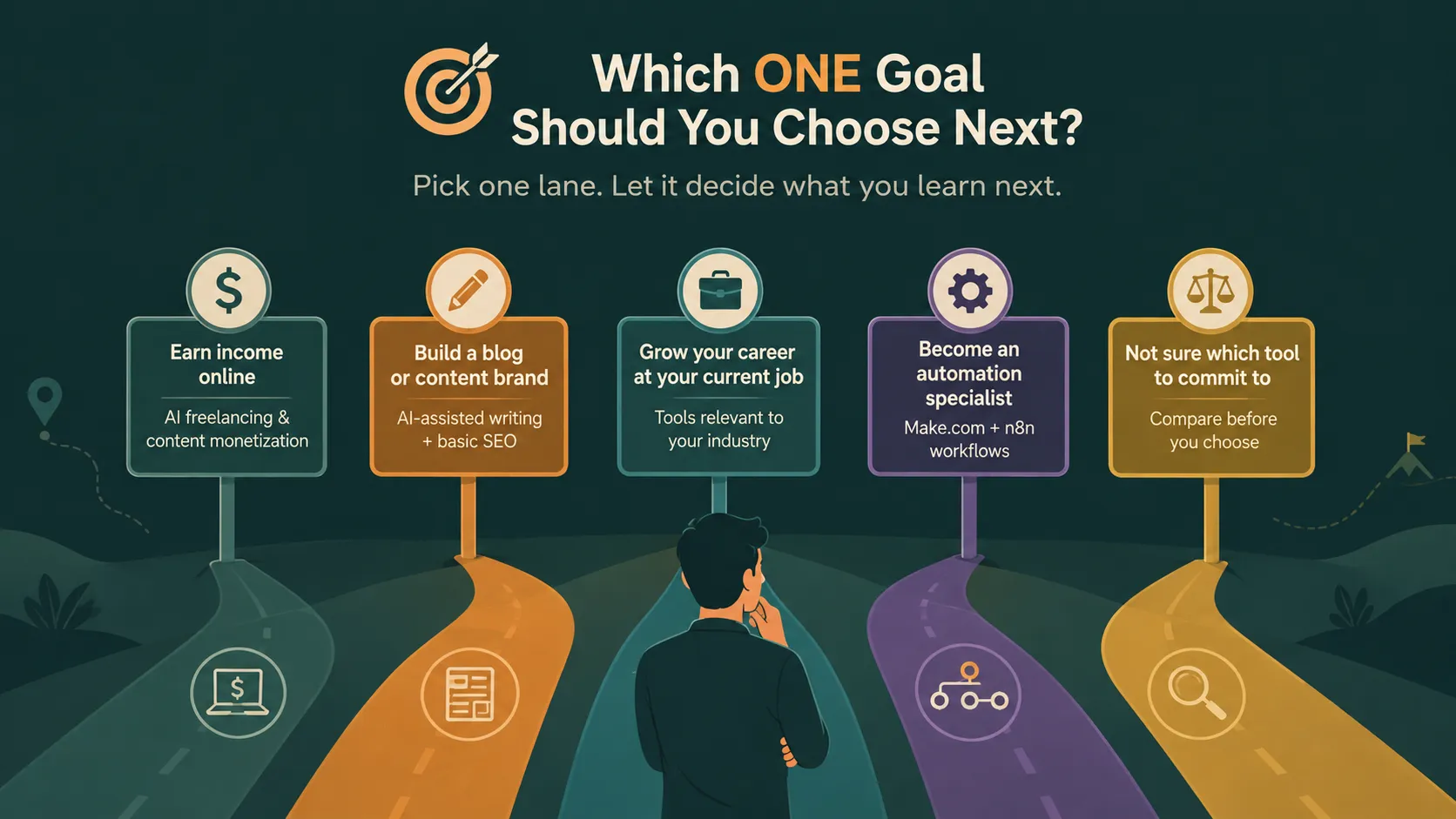
This is the step most beginners skip — and it’s the one that matters most. AI can help with almost anything, which sounds exciting until “almost anything” becomes “too many directions at once.” Pick one lane below, and let it decide what you learn next.
| Your Goal | Learn This First | Go Deeper Here |
| Earn income online | AI freelancing & content monetization | Can You Really Earn Money With AI as a Beginner? 7 AI Side Hustles Beginners Can Start in 2026 |
| Build a blog or content brand | AI-assisted writing + basic SEO | How to Use AI for Blogging in 2026 |
| Grow your career at your current job | Tools relevant to your industry | Career & Skills hub |
| Become an automation specialist | Make.com + n8n workflows | Automation Tools hub |
| Not sure which tool to commit to | Compare before you choose | ChatGPT vs Claude AI (2026) |
If you’re torn between two of these, that’s completely normal. Start with whichever feels more urgent right now — not the one that sounds most impressive on paper. You can always add a second path later, once the first one has real momentum.
What Should Your First AI Project Actually Look Like?
You don’t need a big plan for this — you need something small and real. This week, try one of these: write a single blog post with AI’s help, draft a week of social captions, or build a simple content calendar for something you’re already working on. None of these need to be good. They need to exist. That’s genuinely the whole point.
Can You Really Make Money With AI as a Complete Beginner?
Why Is This Such a Big Opportunity for Beginners in Africa Right Now?
What you don’t need: expensive software, an advanced degree, or startup capital. What you actually need: a working internet connection, time you’re willing to invest, and genuine curiosity. That’s it.
What’s a Simple 4-Week Plan to Get Started?
- Week 1 — Open ChatGPT or Claude daily. Just build the habit.
- Week 2 — Practice deliberately: same task, different prompts, compare the results.
- Week 3 — Build one small, real thing tied to the goal you picked above.
- Week 4 — Review what worked, what was slow, and choose one thing to go deeper on next month.
Your Beginner AI Roadmap at a Glance
| Stage | What You’ll Do | Where to Go Next |
|---|---|---|
| 1. Understand AI | Learn the fundamentals of AI and try your first AI tool. | What Is Artificial Intelligence? |
| 2. Learn Prompting | Practice writing clear prompts and improve your AI conversations. | The First 20 AI Prompts for Beginners |
| 3. Choose One Path | Pick a single goal—blogging, freelancing, content creation, automation, or another AI skill. | Explore your chosen learning path. |
| 4. Build & Specialize | Complete small, real-world projects and gradually develop expertise in one area. | Portfolio and specialization guides. |
| 5. Grow Toward Income or a Career | Turn your skills into opportunities through consistent practice, projects, and continuous learning. | Earn Money With AI as a Beginner |
What Challenges Should You Expect—and Are They Worth It?
Learning AI isn’t a straight path, especially when you’re starting from scratch. Along the way, you’ll likely experience information overload, self-doubt, and moments when it feels like everyone else is learning faster than you.
That’s completely normal.
Progress in AI is rarely dramatic from one day to the next. It happens through small, consistent steps that gradually build your confidence and skills. The people who succeed aren’t necessarily the smartest or the most technical—they’re the ones who keep showing up, practicing, and learning even when progress feels slow.
The challenges are real, but so are the opportunities. If you stay curious, focus on one skill at a time, and keep building practical projects, you’ll be surprised how much you can accomplish over the coming months.
Frequently Asked Questions
How long does it take to learn AI as a complete beginner?
Most beginners feel comfortable using tools like ChatGPT within a few days of daily practice. Real confidence — prompting well and applying AI to a specific goal — typically takes four to eight weeks of consistent, hands-on use rather than passive reading or tutorial-watching.
Do I need to know how to code to use AI tools?
No. Tools like ChatGPT, Claude, and most no-code automation platforms are built for people with zero programming background. Coding can be a useful skill to add later, especially in automation, but it was never the entry requirement for using AI productively.
What’s the best AI tool to start with as a beginner?
ChatGPT or Claude are the most beginner-friendly starting points for writing, research, and everyday problem-solving. Which one suits you better depends on your specific tasks and preferences — see the linked comparison above for a direct, side-by-side breakdown.
Which AI skill should I learn first?
Prompting comes first, regardless of your end goal — it’s the skill every other use of AI depends on. After that, let your chosen goal (income, career, blogging, or automation) determine the next specific skill, using the goal table above.
Can I really make money with AI without any experience?
Yes, though it takes consistent effort rather than instant results. Beginner-accessible paths include AI-assisted freelancing, content creation, and digital products — the tool multiplies effort you’re already putting in, rather than replacing the need for it.
Your Next Step
Do this one thing today: open ChatGPT, Claude, or Gemini, and ask it, “How can I improve my life starting today?” Read the answer, pick one idea, take one action. That’s how every journey begins — not with a grand plan, but with a single move forward.
Want tips like this delivered to your inbox?
Join other beginners across Africa and beyond learning how to use AI to build skills and earn money online. No spam, just practical tips. Sign up here.