
| TL;DR Yes — n8n’s self-hosted Community Edition is free and open-source, so you can build and test real workflows without paying for hosting. The four realistic free routes are: running n8n locally with one terminal command, deploying it on a free-tier cloud platform like Render or Oracle Cloud, using n8n Cloud’s 14-day trial, or testing inside a temporary cloud dev environment. Each trades off uptime, setup difficulty, and how long it stays free — pick the one that matches how far along you are. |
You’ve read that n8n is one of the most powerful — and cheapest — automation tools out there. Then you open a setup guide, and the first step tells you to spin up a VPS, point a domain at it, and configure a database, all before you’ve even opened the n8n editor once.
If that made you close the tab, that’s a completely reasonable reaction. Committing $5–$20 a month to a tool you haven’t touched yet feels backwards, especially while you’re still figuring out whether workflow automation is even the right skill for you.
Here’s the good news: you don’t have to spend anything to find out. n8n’s self-hosted Community Edition is genuinely free and open-source — no license fee, no execution limits — which means the only real cost is where you run it. And there are several ways to run it at exactly $0 while you’re learning.
By the end of this guide, you’ll know the four realistic free ways to test n8n, what each one is actually good for, and the honest signal that tells you it’s finally time to pay for hosting.
You don’t need a server to learn n8n. You need about ten minutes and one terminal command.
What Does “Self-Hosting” Actually Mean in n8n?
Self-hosting means running n8n’s software on infrastructure you control — your laptop, a free cloud instance, or a paid server — instead of paying n8n for its managed Cloud product. Because n8n’s Community Edition is open-source, self-hosting itself costs nothing; you’re only ever paying for the computer it runs on, if you pay at all.
This is actually one of the biggest differences between n8n and tools like Zapier or Make.com. Zapier doesn’t offer self-hosting at all, and Make.com is cloud-only too. n8n is unusual in the automation space because you can run the exact same tool that agencies use for client work, on your own machine, for free, forever. If you’re still deciding between the three, our Zapier vs Make.com vs n8n comparison breaks down where each one actually fits.
| Key Takeaways n8n’s Community Edition is free forever, with no execution or workflow limits — you’re only ever paying for the server it runs on, and you can skip that cost entirely while learning. The fastest free option is running npx n8n locally — live in your browser in about two minutes. Free methods are genuinely enough to build two or three portfolio-worthy workflows — move to paid hosting once you need 24/7 reliability or take on paying clients. |
Can You Run n8n for Free on Your Own Computer?
Yes. If you have Node.js 18 or higher installed, running npx n8n in your terminal starts a full n8n instance on your machine in under two minutes, available at http://localhost:5678, with zero setup and zero cost. If you’d rather keep things contained, the official Docker image works the same way with one command.
This is the lowest-friction way to actually open the editor, drag your first nodes onto the canvas, and see whether n8n’s logic clicks for you before you decide anything else.
The trade-off is straightforward: your workflows only run while your computer is on and the process is running, so it’s not built for anything that needs to fire in the middle of the night or respond to a live webhook from a client’s website.
That limitation doesn’t matter for learning. Every workflow you build locally can still be screenshotted, documented, and turned into a portfolio piece — see our guide on building an AI automation portfolio with no client experience for exactly how to turn a local project into something you can show a prospective client.
How to Run n8n Locally, Step by Step
If you’d rather follow along than piece it together from a docs page, here’s the whole process from a blank computer to your first open workflow:
- Install Node.js. Go to nodejs.org and download the current LTS version (18 or higher). Run the installer with the default settings — no configuration needed.
- Open your terminal. On Mac, open Terminal from Spotlight search. On Windows, open Command Prompt or PowerShell. This is just a text window where you’ll type one command.
- Run the command. Type npx n8n and press Enter. The first run downloads n8n, which can take a minute or two depending on your connection — you’ll see progress in the terminal.
- Open n8n in your browser. Once the terminal shows n8n is ready, go to http://localhost:5678 in Chrome, Firefox, or Safari. You’ll land on the setup screen to create your local account.
- Create your first workflow. Click Add first step, choose a trigger (the Manual Trigger node is the simplest starting point), then add a second node and connect them. Press Execute Workflow to test it.
- Stopping and restarting. Close n8n by pressing Ctrl+C in the terminal. To pick up where you left off, reopen the terminal and run npx n8n again — your workflows are saved locally and will still be there.
Which Free Cloud Platforms Can Host n8n 24/7?
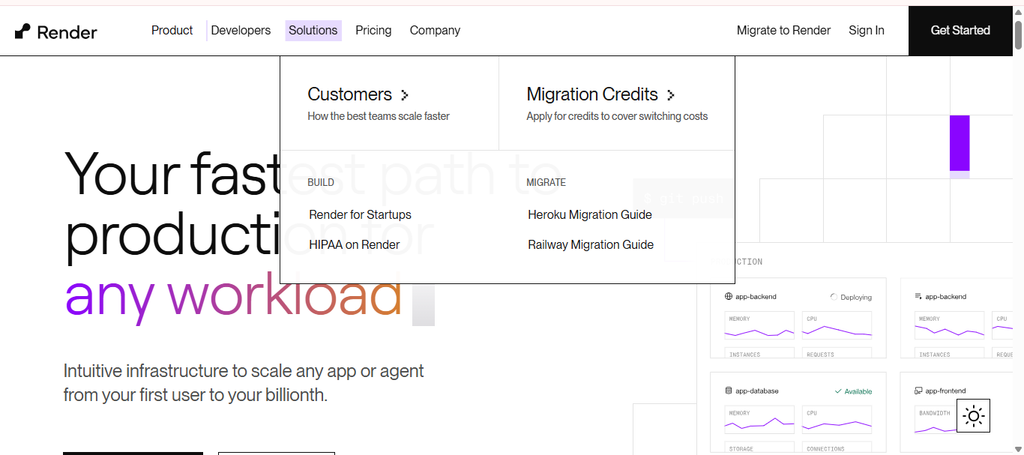
Render.com‘s free tier (750 instance hours a month — enough to run one service continuously) and Oracle Cloud’s Always Free tier (a permanently free ARM virtual machine) can both run n8n around the clock at $0.
Render is the more approachable setup, using Docker through a web dashboard. Oracle’s free instances are more powerful on paper, but they’re notoriously hard to provision, and there are documented reports of free-tier instances being reclaimed without warning — worth knowing before you build anything you depend on there.
Railway offers free usage credits too, but they’re consumption-based and modest, and workflows tend to sleep when idle on the free plan — fine for occasional testing, not for something that needs to be always-on.
This route is genuinely a step up in complexity from running n8n locally. You’ll be working with Docker, environment variables, and — if you want your workflows to survive a restart — a connected database like Supabase for persistent storage.
It’s worth the extra setup once your goal shifts from “learning how n8n works” to “having a live, webhook-triggered workflow I can actually point someone to.”
That shift matters more than it sounds — a live demo is a stronger portfolio piece than a local-only one, which is exactly the gap our guide on getting your first AI automation client walks through.
Is n8n Cloud Free to Try?
n8n Cloud doesn’t have a permanent free plan — that option was removed in 2025. But every new account gets a 14-day free trial with Pro-plan features (up to 1,000 executions), and the Starter and Pro trials don’t require a credit card at signup. It’s the easiest way to explore the real, hosted interface without touching a terminal at all.
The trade-off is time, not money: if you don’t upgrade by the end of the trial, your workspace is deleted, though n8n gives you 90 days after the trial ends to download and keep your workflows. Treat the Cloud trial as a two-week test drive of the interface, not a place to build anything you plan to keep running long-term for free.
Can You Test n8n in a Free Cloud Dev Environment?
Yes, temporarily. Free-tier cloud coding platforms let you run n8n inside a temporary container you access from a browser, which is handy for a one-off test session or a quick demo without installing anything locally. These environments are built to be disposable, though — expect them to pause, reset, or expire, so they’re a scratchpad for exploring n8n, not a home for any workflow you actually want to keep.
Which Free Method Actually Fits You?
- Just opening n8n for the first time? Start local — run npx n8n and get comfortable with the canvas.
- Want to build two or three portfolio pieces without spending anything? Local install, with an occasional Render free-tier deploy for anything that needs a real, live webhook.
- Want to see the polished interface before doing any technical setup? n8n Cloud’s 14-day trial — no terminal required.
- Already comfortable with Docker and want free hosting that runs 24/7? Render or Oracle’s Always Free tier — budget patience for the setup.
Here’s the same comparison side by side:
| Method | Cost | Difficulty | Runs 24/7? | Best For |
| Local computer | $0 | Easy | No | Learning the basics |
| Render (free tier) | $0 | Medium | Mostly | Live demos, testing |
| Oracle Always Free | $0 | Hard | Potentially | Advanced, patient users |
| n8n Cloud trial | $0 (14 days) | Very easy | Yes | Trying the interface |
| Cloud dev environment | $0 | Easy | No | One-off testing |
When Should You Actually Pay for n8n Hosting?
Free methods stop being the right tool the moment reliability starts to matter more than cost.
That usually means one of three things: you need a workflow running 24/7 without you babysitting it, you’ve taken on a paying client whose business depends on it working, or you’re relying on webhooks that need to respond instantly rather than “whenever the free instance wakes back up.”
At that point, a modest $5–$10/month VPS — or a managed n8n hosting option — removes the sleep limits, capacity errors, and manual restarts that come standard with free tiers.
That transition is usually the same moment people start thinking seriously about automation as a service they could sell, not just a skill they’re learning. If that’s the direction you’re headed, our guides on becoming an AI automation specialist and finding your first AI freelance platform are the natural next steps.
| If n8n Feels Like More Setup Than You Want Right Now That’s a completely reasonable place to land. n8n rewards technical comfort — Docker, webhooks, environment variables — and not everyone wants that while they’re still learning what automation even looks like. Make.com’s free plan needs no server knowledge at all to get started, which is part of why I still point most complete beginners there first. See the Make.com beginner’s guide if you want to compare the two. Disclosure: I’m an affiliate for Make.com — if you sign up through my referral link, it costs you nothing extra, and it helps support the free content on this site. |
Frequently Asked Questions
Is n8n really free to use?
Yes, for self-hosting. n8n’s Community Edition is open-source and free forever, with unlimited workflows and executions. The only thing you ever pay for is the server it runs on — and several methods above let you skip that cost entirely while you’re learning.
What’s the actual catch with free n8n hosting?
The catch is reliability, not cost. Local installs stop when your computer sleeps, Render’s free tier can idle, and Oracle’s Always Free instances are sometimes hard to provision or get reclaimed without warning. Free is real — it just isn’t production-grade.
Can I do real client work without paying for hosting?
You can build and demo workflows for free, but taking on a paying client usually means your automation needs to run reliably around the clock — which is when a small paid VPS, often $5–$10 a month, stops being optional.
Does the n8n Cloud free trial require a credit card?
No, for the Starter and Pro trial tiers. Only the Business plan trial asks for payment details upfront. The Starter and Pro trial lasts 14 days and gives you Pro-level features with a 1,000-execution limit.
What happens to my workflows when the free trial ends?
If you don’t upgrade, your n8n Cloud trial workspace is deleted — but n8n gives you 90 days after the trial ends to download your workflows and reuse them elsewhere, including on a free self-hosted setup.
Is self-hosting too technical for a complete beginner?
Running n8n locally with one command isn’t technical at all. Deploying it on a free cloud platform is a bigger step — it involves Docker and environment configuration — so most beginners start local, then move to cloud hosting once they’re comfortable.
Where to Start
None of this requires you to know what you’re doing yet — that’s kind of the point of free. Open a terminal, run one command, and see what n8n actually looks like before you decide whether it’s worth a cent.
If you’re curious how a beginner turns a skill like this into actual income, earning money with AI as a complete beginner is the best place to start.